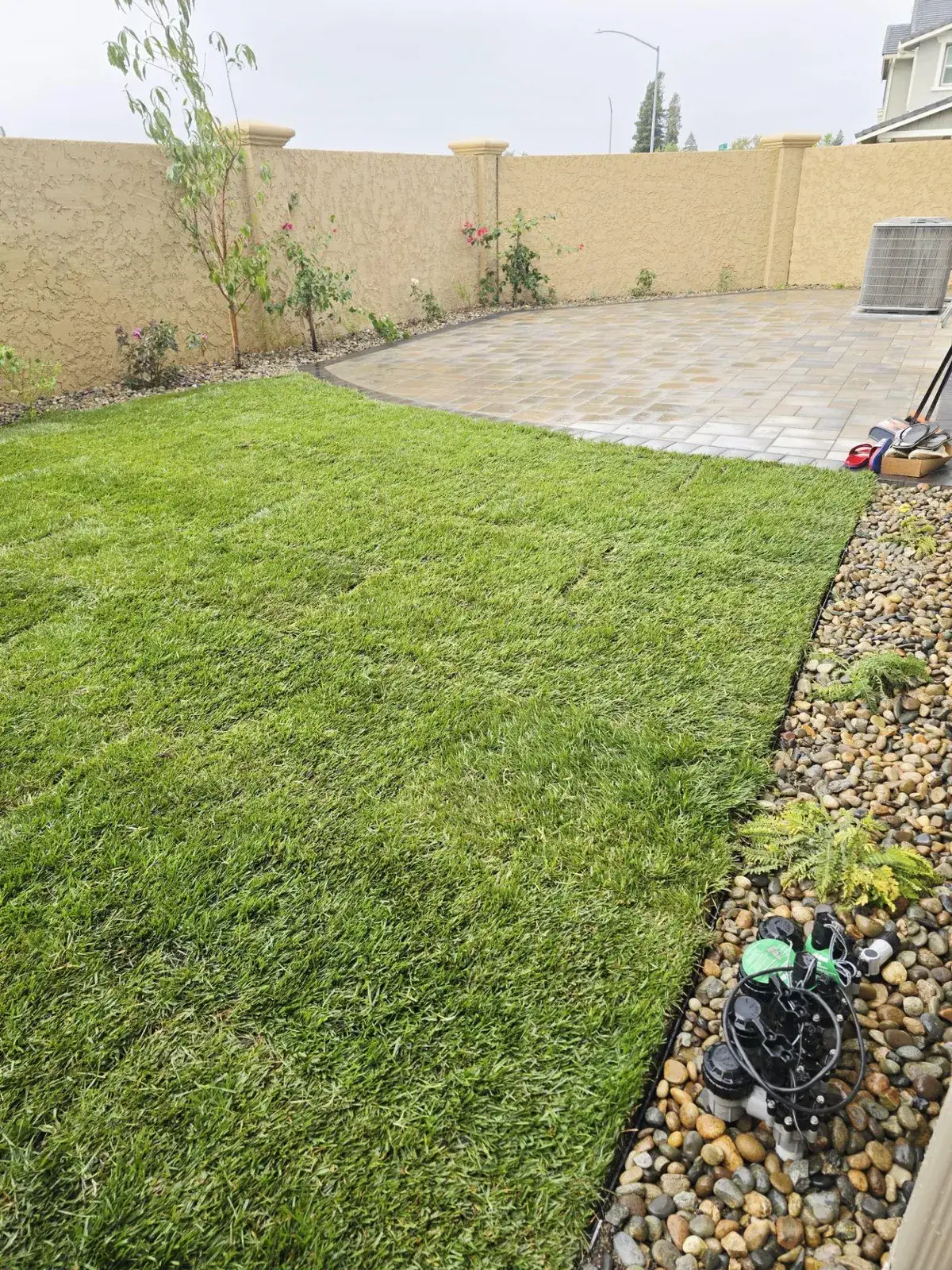
San Jose drainage corrections have a published range of $1,500 to $8,000, a starting budget for discussing French drain work. Trench length, outlet requirements and access or surface restoration move the price. At Landscape Associates of CA, we are fully insured and offer a free on-site estimate with the drainage scope itemized by project.
French drain cost in San Jose at a glance
- San Jose drainage corrections have an overall guide of $1,500 to $8,000.
- A short accessible route to daylight represents the simpler end near $1,500.
- A long route with a dry well, roots and paving restoration approaches the more involved end near $8,000.
- Drainage work carries a 2-year warranty.
- A curb outlet involves a Transportation Department permit: San Jose street-edge rules (checked October 2026).
| Project | Size | Price range | Notes |
|---|---|---|---|
| Accessible run to daylight | Short route, measured on site | Lower end of the $1,500 to $8,000 guide | Trench, collection pipe, stone, fabric and a suitable exposed outlet. |
| Through existing planting to a dry well | Route set by the planting and destination | Priced within the overall drainage assessment | Excavation, storage or infiltration suitability, connections and landscape restoration. |
| Long run under paving with roots | Longer route, measured at the property | Higher end of the $1,500 to $8,000 guide | More excavation, root constraints, lifted paving and restoration alongside the drain. |
The range covers drainage corrections generally; we do not publish a French drain price per foot. A complete job connects the wet ground to a suitable destination and restores the disturbed surface. Pipe length alone leaves out that outlet, the conditions around roots and the work needed to put paving back.
How French drain pricing works
A French drain collects subsurface water through perforated pipe laid in drain rock, with filter fabric separating the stone from surrounding soil. Water enters along the collection section and follows the planned route to an outlet. The fabric helps keep soil from filling the voids intended to carry water.
A daylight outlet releases water at an exposed destination where the site and applicable approvals allow it. A dry well instead receives water below ground for infiltration where conditions are suitable. Neither option follows automatically from having room for a trench; the destination determines whether the proposed collection route can function.
We look for persistent soggy ground after rain, moisture collecting along a retained slope, and low areas that remain wet while nearby surfaces dry. Those signs warrant investigation, but do not all call for the same remedy. A surface catch basin collects visible flow, while a French drain addresses water moving through soil.
Project pricing brings excavation, pipe, drain rock, fabric, connection labor and basic restoration into one defined scope. Paving demolition and haul-off, special access, permits and engineering are itemized in the estimate. A pumping or electrical requirement would need separate definition rather than being assumed inside a gravity-drain allowance.
Cost by type
| Type | Best for | What changes the price | Relative cost |
|---|---|---|---|
| French drain | Wet ground and subsurface interception | Collection route, outlet and buried conditions | mid |
| Catch basin and surface drain | Runoff at a low point | Inlet position, conveyance and destination | lower |
| Regrading | Surface water following the wrong slope | Soil movement and landscape restoration | mid |
| Dry creek bed | An open landscape flow route | Excavation, rock and stable discharge | mid |
| Downspout routing | Concentrated roof runoff | Solid pipe route and outlet connection | lower |
| Channel drain | Surface flow beside paving | Cutting, channel setting and restoration | higher |
French drains for saturated ground
The perforated collection line is surrounded by stone so moisture can reach the pipe along its route. We use fabric to separate that drainage envelope from soil. The selected outlet and elevations matter as much as trench length; a buried line ending without a workable destination simply moves the collection problem.
Catch basins for surface runoff
A catch basin receives visible water through a grate at a designed low point. A connected line then carries that flow away. Leaves and sediment need accessible cleaning space. The basin does not replace the destination, so we price the inlet and downstream route together instead of treating the grate as the entire fix.
Regrading to change the surface route
Regrading reshapes ground so water follows an intended surface path. That can address a shallow low spot without a buried collection line, provided the surroundings allow the change. Doorways, fences, planting and neighboring elevations constrain the design. Moving soil also means restoring the lawn or beds disturbed by the work.
Dry creek beds through landscaping
A dry creek bed creates an open route using shaped ground and rock. Its appearance can fit planting while its purpose depends on where flow begins and ends. Decorative stones placed in a depression do not establish a functioning channel by themselves; the route and discharge need to be designed together.
Downspout connections for roof water
Downspout routing starts with concentrated roof runoff and usually uses a solid conveyance line rather than collecting water through perforations along the way. We identify that source separately from wet soil. Combining discharges without considering their destination can send additional water into a system meant to relieve saturation.
Channel drains beside paved surfaces
A channel drain collects water along a line at the surface, often where paving meets a constrained threshold. Setting the channel into existing concrete or pavers adds removal and restoration. Its grate needs maintenance access, and the connected outlet must work with the elevations available at that boundary.
What moves the price
Route length and trench conditions
A longer collection route uses more pipe, stone and excavation, but the ground also affects the effort. Established planting and old buried construction constrain the trench. We establish the destination first, then compare practical routes to it, avoiding an attractive line on a sketch that cannot discharge properly.
Daylight outlets and dry wells
A suitable exposed outlet can keep the assembly straightforward. A dry well adds excavation and an infiltration assessment, plus connections and surface restoration above it. We do not select underground storage just because the outlet is hard to see; the receiving ground must be appropriate for that approach.
Pavers or concrete above the drain
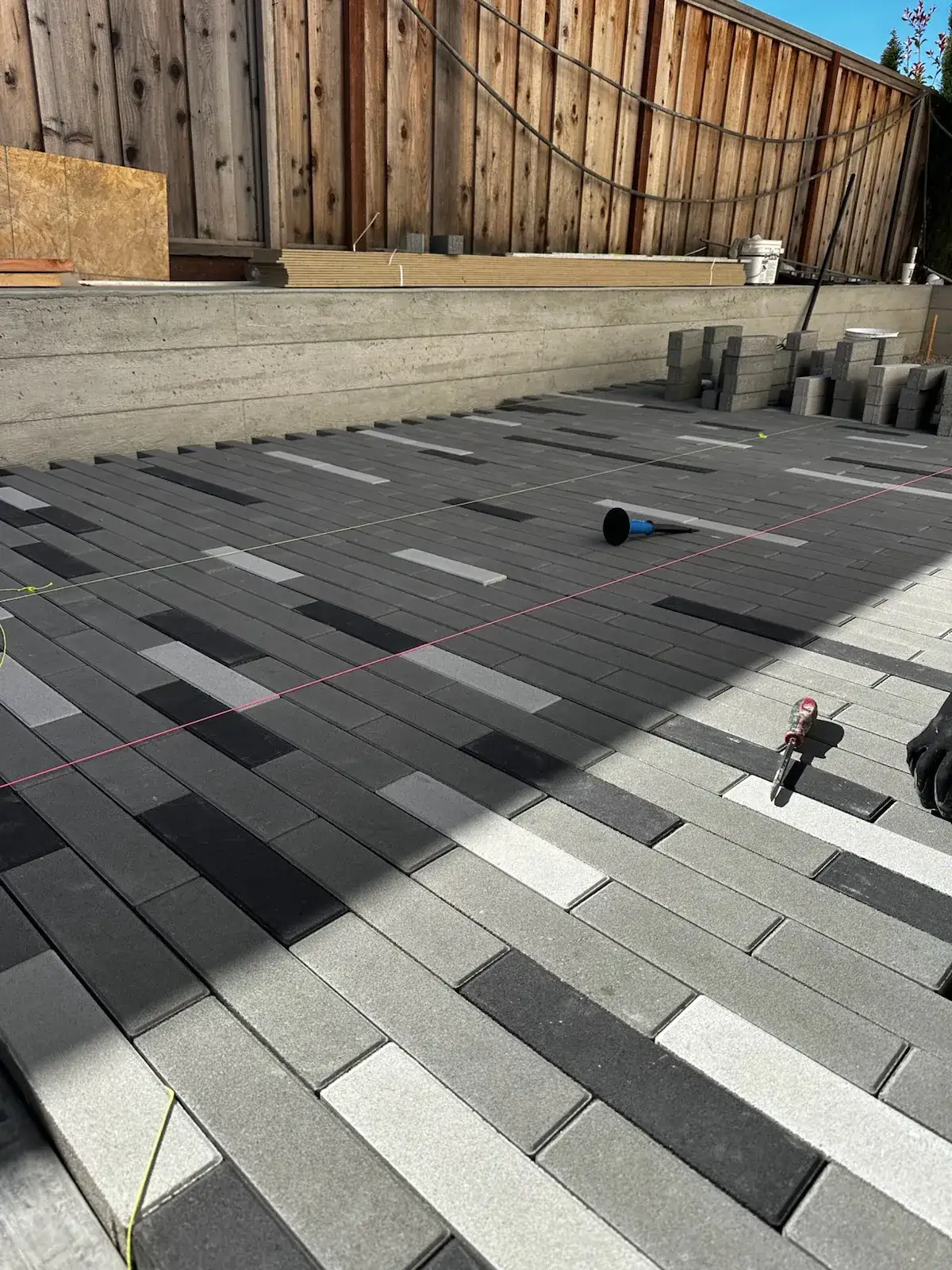
Crossing a finished patio means lifting or cutting the surface and restoring it after buried work. Matching the old pattern and preparing its support add tasks beyond laying pipe. Our paver patio cost guide explains the layers that need to function again after restoration.
Tree roots and protected areas
Roots can force a different alignment or a more careful excavation method. Protected trees also introduce local review questions. We map that constraint before deciding where a collection line belongs, because cutting the shortest route through a root zone can create a problem that the drain budget never considered.
Access for soil and drain rock
Narrow side passages affect how excavated soil leaves and stone reaches the trench. A hillside adds another handling challenge. The route for materials can differ from the buried route for water, so both need room in the construction plan before the homeowner compares a simple open-yard scenario.
Retaining loads and adjoining lawn work
Drainage behind a retained slope must fit the retaining wall design, while work below a lawn comes before the new surface. We coordinate the artificial turf budget with buried corrections so fresh backing and infill do not have to be lifted later.
Worked examples
An accessible short run to daylight
At the simpler end near $1,500, imagine wet ground with an accessible route to a suitable exposed outlet. We establish the outlet, excavate the trench, place fabric and drain rock around perforated pipe, connect the discharge and restore the disturbed strip. There is little paving to lift and no dry well to construct.
A route through planting to a dry well
In established landscaping, the trench must pass beds and connect to an underground destination suited to the ground. We account for dry well excavation, pipe connections, soil removal and restoration of disturbed planting. This adds work beyond the short daylight scenario, but the published guide does not assign a separate middle price.
A longer route beneath paving and around roots
Near the more involved end around $8,000, a longer route can include a dry well, paving lifted and roots worked around. The assembly still uses a planned collection line, but excavation and restoration become substantial parts of the job. We rebuild the supporting layers under lifted units instead of replacing only the visible surface.
What sits at each end of the range
The $1,500 end is a short trench from one wet area to a daylight outlet a few steps away, dug through lawn or bare soil, with nothing to lift and nothing to rebuild except the strip of grass. The middle of the range adds length, a route threaded between beds and tree roots, and usually a dry well because the yard has no exposed outlet. The $8,000 end combines all of that with paving: pavers or concrete lifted along the route, the base rebuilt and the surface relaid, plus a dry well sized for the receiving ground.
Cost in Saratoga, Los Gatos, Los Altos, Monte Sereno, Monterey and Carmel
| City | Published range | The local rule that affects the job | Link |
|---|---|---|---|
| San Jose | $1,500 to $8,000 for drainage corrections | Curb, apron or sidewalk work needs a Transportation Department permit. Outlet-related street work (checked October 2026) | San Jose |
| Saratoga | priced at the estimate | Geotechnical clearance covers new structures, additions and basements in hazard areas; drains are not specifically named. Clearance guidance (checked October 2026) | Saratoga |
| Los Gatos | priced at the estimate | Cutting roots over 4 in on Large Protected or Heritage trees needs a permit. Tree protection FAQ (checked October 2026) | Los Gatos |
| Los Altos | priced at the estimate | Removing a protected tree requires City approval, relevant when aligning an excavation. Tree process (checked October 2026) | Los Altos |
| Monte Sereno | priced at the estimate | Associated retaining walls carrying surcharge do not qualify for the building exemption for walls not over 4 ft measured from footing bottom to top. Building FAQ (checked October 2026) | Monte Sereno |
| Monterey | priced at the estimate | Building permit projects must follow tree protection guidelines before permit issuance. Root-zone protection (checked October 2026) | Monterey |
| Carmel | priced at the estimate | Work in the public right-of-way (gravel, boulders and other above-ground features) needs encroachment approval. Right-of-way statement (checked October 2026) | Carmel |
Saratoga and Los Gatos hillside drainage is priced from the actual slope, access and receiving outlet. We also serve Los Altos Hills, Carmel Valley and Pebble Beach, where associated approvals follow the property jurisdiction.
Permits, rebates and water rules
San Jose grading rule for associated walls
On San Jose single-family and duplex lots, a retaining wall needs a Public Works Grading Permit if it carries a surcharge or measures 4 ft or more from footing bottom to top. That matters when drainage is part of wall work; it is not a blanket grading rule for every French drain. See San Jose retaining wall permit page (checked October 2026).
San Jose curb outlet permission
A drain outlet cut through the San Jose curb involves work for which the City requires a Transportation Department permit. Its stated scope is curb, apron or sidewalk work. The outlet route therefore affects the approval scope as well as excavation. See San Jose curb and sidewalk requirements (checked October 2026).
Valley Water runoff restrictions
Valley Water Ordinance 23-02 prohibits watering that causes more than incidental runoff on properties using Valley Water-supplied potable water. We distinguish leaking or excessive irrigation from stormwater before selecting a correction. This is a watering restriction, not permission to discharge stormwater. See Valley Water runoff ordinance (checked October 2026).
Saratoga geotechnical scope
Saratoga requires geotechnical clearance for new structures, additions and basements in geologic hazard areas, giving hillsides and creek-side land as examples. Its page does not specifically mention drains, retaining walls or grading. The City determines applicability to associated construction in a combined project. See Saratoga geotechnical clearance page (checked October 2026).
How the project runs
Step 1: Trace the wet area and water source
The free visit starts with the wet ground, nearby downspouts, irrigation and surface slopes. Photos taken during rain can show flow that is absent on a dry visit. We define the symptom and its likely route before selecting a French drain, catch basin or grading correction.
Step 2: Set the destination and design
We work from the outlet back toward the collection area, comparing elevations and practical excavation routes. A dry well requires suitable receiving ground. Any engineering associated with retained soil or structures is identified alongside the design, rather than concealed in a trench length.
Step 3: Agree approval responsibilities
A San Jose curb outlet involves the Transportation Department under the City street-work requirements (checked October 2026). Ask us who will obtain the required approval for your proposal.
Step 4: Excavate and assemble the drain
We establish the outlet and work through the trench route, placing the specified collection pipe within drain rock and filter fabric. Connections must follow the planned elevations. Surface inlets or solid conveyance lines are added where the design calls for them, with the destination complete before covering the assembly.
Step 5: Restore paving and landscape surfaces
Backfilling and restoration follow the installed system. Lifted pavers need their supporting layers rebuilt, while disturbed beds or lawn receive the agreed finish. We clear debris without burying grates or outlet openings, because those points still need inspection and cleaning after construction.
Step 6: Walk the route and maintenance points
At handover we identify the collection area, discharge and accessible cleaning points, then review the written coverage that applies. Drainage carries a 2-year warranty. Grates and exposed outlets need to remain clear; a completed trench does not eliminate leaves or sediment from the yard.
How to keep the cost down without a cheap job
- Choose a workable outlet before spending on a long collection trench.
- Compare regrading with buried pipe when the issue is visible surface flow.
- Install underground corrections before laying new pavers or synthetic grass.
- Preserve construction access until drain rock delivery and soil removal finish.
- Include patio restoration when comparing routes that cross existing paving.
- Keep roof runoff and saturated-soil collection distinct in the design.
- Phase optional planting after the discharge route and restored ground are complete.
Mistakes that make it cost more later
Digging before choosing a destination
A trench can collect water without having anywhere suitable to release it. That leaves the core problem unsolved beneath new stone and fabric. We establish the discharge and available elevations first, so the route connects working components instead of ending at an arbitrary spot in the yard.
Using perforated pipe for every task
Perforated pipe collects along a buried route; solid pipe carries water between defined points. Roof runoff and soil moisture are different sources. Choosing the pipe by habit rather than purpose can distribute water where collection was intended, so the assembly needs to identify each section clearly.
Leaving soil mixed into drain rock
Drain rock needs open spaces for water movement. Filter fabric separates that envelope from surrounding soil, while installation keeps loose sediment from filling it before burial. Skipping that separation can undermine the collection layer even when the finished ground appears neat and the outlet is visible.
Restoring only the visible paving
A drain crossing disturbs support below the patio as well as the units on top. Replacing pavers over poorly prepared backfill can leave future movement at the trench. Restoration must rebuild the affected assembly, with elevations and the surface water route matching the agreed design.
Treating every wet patch as groundwater
A leaking irrigation line or concentrated downspout can create a wet area that resembles a subsurface problem. A French drain may leave that source running. We examine the supply and surface flow before selecting the correction, keeping irrigation repair distinct from collecting stormwater through the soil.
What is in a Landscape Associates estimate
We provide a free on-site assessment and itemize the drainage project. David Muhoberac founded Landscape Associates in 1987, and inquiries receive a reply within 24 hours. The proposal describes collection, conveyance, destination and restoration so the price follows a complete correction instead of an isolated pipe purchase.
- Source of water, proposed route and the outlet or dry well.
- Excavation, collection pipe, drain rock, filter fabric and connections.
- Catch basins, channel drains or separate grading where specified.
- Paving removal and restoration, disposal, access work and applicable approvals or engineering.
Our drainage service covers the available corrections. Use the San Jose landscaping cost guide and Saratoga landscaping cost guide to plan the surfaces installed afterward, keeping the underground route open until construction is complete.
Sources and how we price
- City of San Jose Fences and Retaining Walls (checked October 2026)
- City of San Jose Driveways and Sidewalks (checked October 2026)
- Valley Water Ordinance 23-02 (checked October 2026)
- Saratoga Geotechnical Clearance (checked October 2026)
- Los Gatos tree removal and pruning FAQ (checked October 2026)
- Los Altos protected tree handout (checked October 2026)
- Monte Sereno Building FAQ (checked October 2026)
- Monterey Tree Protection Guidelines (checked October 2026)
- Carmel Right-of-Way Vision Statement (checked October 2026)
The drainage range comes from our own published San Jose figures; our Saratoga landscaping guide covers broader project budgets. We update prices when the estimate book changes and price each job at a free on-site visit. The destination, trench conditions and restoration define the actual correction.
Call or text (408) 207-5545 for a free on-site drainage estimate. We reply within 24 hours; photographs of the wet ground and nearby downspouts can help explain what happens during rain.
Questions homeowners ask
How much does a French drain cost in San Jose?
San Jose drainage corrections have a published range of $1,500 to $8,000, used to begin a French drain budget. A short accessible daylight route involves different work from a longer trench with a dry well and restored paving. We define the collection line, destination and disturbed surfaces before pricing the complete correction.
Is a French drain worth it?
A French drain in San Jose is useful when subsurface collection addresses the actual source of wet ground and has a workable outlet. Surface runoff may need a catch basin or regrading instead. We compare the proposed correction with the cause before assigning the drainage budget, rather than installing buried pipe simply because a lawn is soggy.
Is a French drain better than regrading?
For San Jose drainage, a French drain collects moisture through soil while regrading changes where surface water flows. The better choice depends on the source and available elevations. A low surface depression may respond to reshaping, while persistent subsurface wetness can need collection pipe, drain rock and an appropriate destination.
Do I need a catch basin or a French drain?
A San Jose catch basin receives visible runoff through a grate, while a French drain collects water along a buried perforated line. Both require a suitable destination. We look at whether the problem is surface flow or saturated ground, then include the outlet and restoration with the selected inlet or collection assembly.
Where does the water from a French drain go?
A San Jose French drain needs a planned destination, such as a suitable daylight outlet or a dry well where infiltration conditions allow. The collection trench alone does not answer that question. We establish the outlet and elevations before finalizing the route, including access for future cleaning and any associated approvals.
Do I need a permit for a drain outlet through the curb?
A San Jose drain outlet cut through the curb involves work requiring a Transportation Department permit. The City names curb, apron and sidewalk work in that requirement. Include the public connection in the proposed scope rather than assuming a private-yard trench settles the entire approval question. See San Jose street-work guidance (checked October 2026).
When does drainage work need a grading permit?
For San Jose drainage combined with retaining construction, a wall carrying surcharge or measuring 4 ft or more from footing bottom to top needs a Public Works Grading Permit on single-family and duplex lots. That is a wall-related trigger, not a blanket rule for all drains. See City grading requirements (checked October 2026).
Should drainage be fixed before a new patio?
San Jose drainage corrections should be coordinated before the new patio closes the ground. A collection line crossing finished paving adds lifting and restoration, including support beneath the units. We establish the route and outlet first, then build the surface around the agreed elevations so the later work does not undo the earlier installation.
What warranty comes with drainage installation?
Our San Jose drainage work carries a 2-year warranty. The written coverage and maintenance responsibilities belong with the specific French drain, outlet and restoration scope. We review accessible grates and discharge points at handover because keeping leaves and sediment clear remains part of ownership after the buried assembly is finished.
What are the signs I need a French drain?
San Jose yards may need subsurface drainage investigation when ground stays soggy after rain, moisture collects along a retained slope, or low areas remain wet after nearby surfaces dry. Those signs do not identify the remedy by themselves. We check downspouts, irrigation and surface grades before choosing a French drain over another correction.
How long does French drain installation take?
A San Jose French drain schedule depends on excavation access, outlet construction, root constraints and restoration of disturbed paving or planting. The sequence includes defining the destination, digging, placing the collection assembly and rebuilding the surface. The estimate gives the schedule for that scope.
Can I install a French drain myself?
A San Jose homeowner can understand the French drain components, but installation requires more than filling a trench with stone. The outlet, elevations, filter separation, utility conflicts and root constraints need resolution before digging. Hiring help becomes especially valuable where paving restoration or public connections complicate the route; an unsuitable destination remains unsuitable regardless of who excavates.
Get in Touch
Call us, send the estimate form, or email us. We reply within 24 hours to book a free site visit. Call or text (408) 207-5545.
- (408) 207-5545
- david@landscapeassociatesca.com
- Mailing address: 125 Surf Way #443, Monterey, CA 93940
- Mon - Fri: 8:00-5:00 · Closed on weekends