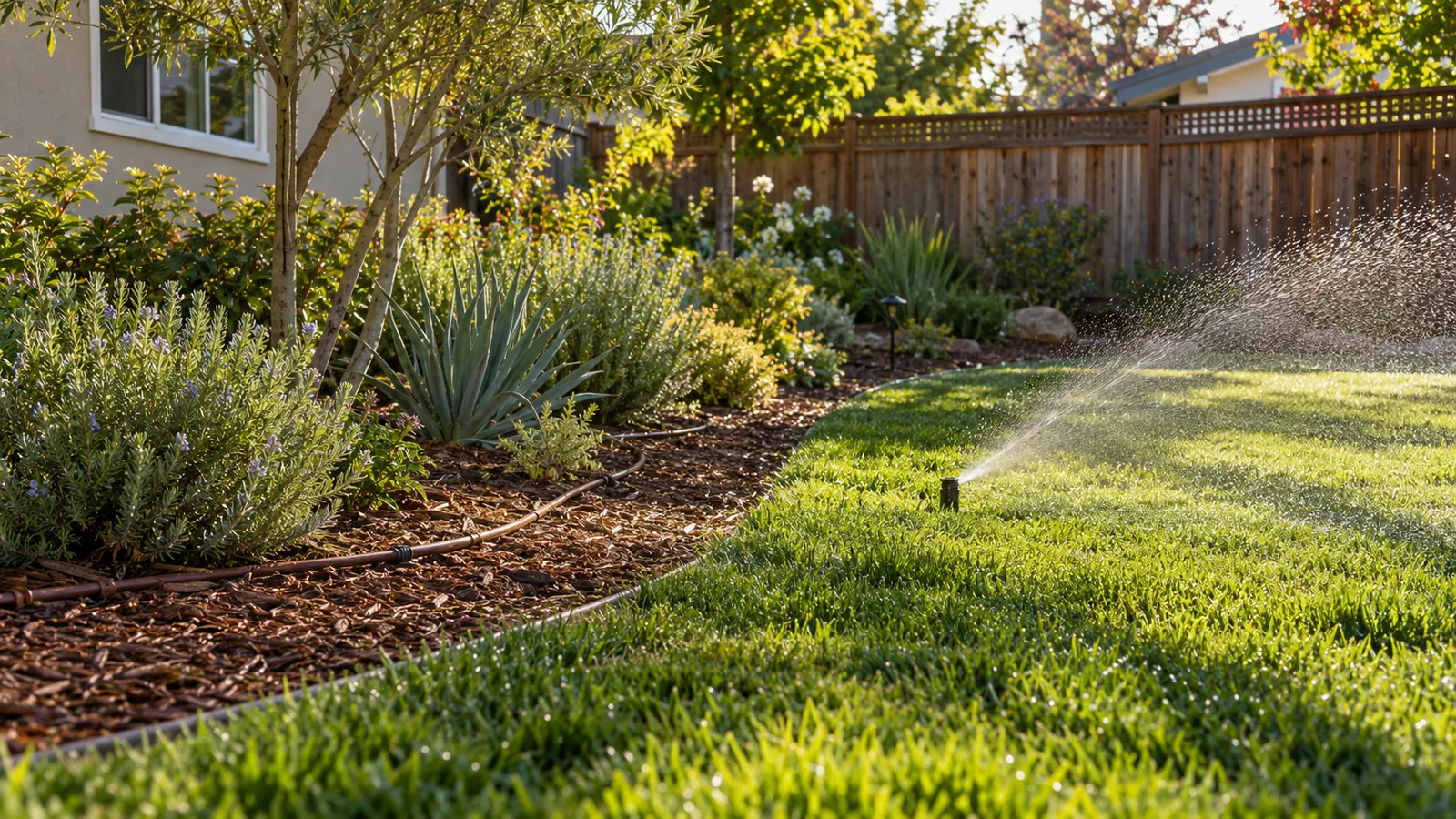
Drip vs sprinklers at a glance
Drip suits planting beds, shrubs and trees because it puts water at the roots, while spray or rotor heads suit lawns. Neither choice removes the need to inspect the system. Compare the area being watered, how readily its soil absorbs water, and how you will spot problems.
| Factor | Drip | Spray or rotor |
|---|---|---|
| Best for | Planting beds, shrubs and trees | Lawn areas with similar watering needs |
| How water is delivered | Slow application at or below the soil surface near roots | Overhead application across the planted area |
| Runoff on clay and slopes | Slow delivery helps; watch soil absorption and pooling | Shorter cycles with soak time can limit runoff |
| Visibility of problems | Covered tubing and emitters take closer inspection | Watch operating heads for misdirected or uneven coverage |
| Upkeep | Check emitters, filters, tubing and root-zone coverage | Check heads, valves, leaks and spray direction |
| Fit with watering-hour rules | Soil-level delivery; review applicable watering restrictions | Schedule around the overhead-irrigation prohibition |
Sources: UC IPM irrigation methods, Santa Clara County irrigation tips, UC lawn watering, and Valley Water watering restrictions (checked October 2026).
When drip makes sense
Drip makes sense when you want to water a planted bed, shrubs or trees directly at soil level. It lets you place delivery points around the plants instead of spraying the whole area. The important question is whether the layout wets the roots that need water.
Start with the planting plan. Group plants with similar watering needs so they can share a schedule, as UC’s drip guidance recommends. If you are choosing drought-tolerant plants, discuss their watering needs alongside the irrigation layout. Do not choose the plants and leave the delivery points as an afterthought.
Allow for growth, too. An emitter layout that served a small plant needs another look as its roots expand. UC’s Santa Clara County guidance recommends expanding irrigation circles or spirals around growing trees and large shrubs. Check the soil around the roots rather than judging watering by the appearance of the tubing alone.
Drip still needs attention. UC’s drip maintenance guidance calls for checking stressed plants, clogged emitters, loose fittings and damaged tubing. Include access for inspection in your plan, especially where mulch will cover the lines.
When sprinklers make sense
Sprinklers make sense for a lawn that needs water distributed across its surface. Choose the layout around the grass area and verify coverage while the heads are running. A sprinkler system should wet the intended lawn without relying on extra runtime to compensate for a poorly aimed head.
UC recommends a container or “can” test to check how evenly sprinklers apply water. If one area receives less than another, inspect the heads and their coverage before changing the entire zone’s schedule. Check for leaks, broken or misdirected heads and faulty valves, using UC’s lawn-watering checklist.
On a slope, watch where the water goes. Shorter watering cycles separated by time to soak in can help avoid runoff. Keep lawn sprinklers and drip on different valves: Valley Water’s zone guidance advises against mixing the equipment types within one zone. That allows each area to have its own schedule.
Watering rules that shape the choice
For properties using Valley Water-supplied potable water, the ordinary watering restrictions address overhead irrigation hours, runoff and rain. Build those limits into the schedule before choosing convenient start times. The following summary follows Valley Water Ordinance 23-02 and its agency summary, checked October 2026.
- No overhead irrigation 9 AM to 6 PM.
- No more than incidental runoff.
- No watering during or within 48 hours after 0.25 in of rain.
The hours provision specifically addresses overhead irrigation. Do not treat a change of equipment as a reason to ignore runoff or rainfall. Confirm requirements for the water provider serving your address before programming a system.
For equipment upgrades, Valley Water lists in-line drip, weather-based controllers, rain sensors, high-efficiency nozzles, and pressure-regulating or check-valve spray bodies in its rebate offerings (checked October 2026). The program sets eligibility. Review the application requirements before buying equipment or starting work; a listed equipment category does not guarantee your project a rebate.
Smart controllers
A smart irrigation controller such as Hunter Hydrawise can adjust watering in response to weather, but it still needs appropriate settings for the yard. Hunter’s Hydrawise documentation describes configurable triggers that can suspend irrigation before rain or change watering during hot weather. Start with the plants, zones and permitted schedule, then configure weather adjustments.
Hunter’s trigger guide explains temperature, rain-probability and wind settings. Its time-based scheduling guidance also makes the homeowner’s setup role clear: you choose runtime, start time and watering days. Check those settings instead of assuming that selecting a weather feature completes the job.
Ask to see a zone run and to be shown how its schedule is changed. Include an equipment inspection in that conversation. A controller adjustment is not a repair for a leaking line or a sprinkler aimed at paving.
How we approach an irrigation project
We start with a free on-site estimate, checking the lawn, planting beds, existing equipment and water pressure. We work across San Jose, Los Gatos, Saratoga and the other cities on our locations page. We plan separate watering areas for lawns and beds, then discuss the work needed. Landscape Associates of CA provides itemized project pricing and a 2-year irrigation warranty.
We use Rain Bird and Hunter components, with Rachio or Hunter Hydrawise smart controllers. Before setting the schedule, we check sprinkler coverage, drip placement and connections, then show you the controls. Our irrigation page states the price with its scope: “New San Jose systems: $3,000 to $10,000.”
For the estimate visit, point out dry patches, recurring puddles and any planting changes you have planned. If water collects after irrigation, ask about both watering and drainage. Bring your repair concerns as well as your wish list so the discussion starts with the yard you actually have.
Frequently asked questions
The right system depends on the planted area, soil and condition of the existing equipment. These answers cover the choices to discuss before installation or conversion. For the watering-hours question, the stated limits apply to properties using Valley Water-supplied potable water; check the provider serving your address.
Is drip irrigation better than sprinklers?
Drip is a good fit for planting beds, shrubs and trees, while sprinklers suit lawn coverage. Decide by area rather than declaring a winner for the entire property. If the yard includes grass and planted borders, separate zones let their watering schedules differ. UC’s comparison explains the difference between focused root-zone delivery and broadly distributed sprinkler water. Inspect either system regularly and check whether it reaches the intended roots.
Can I convert sprinklers to drip?
Yes, sprinkler-to-drip conversion is possible, but it requires suitable equipment and a plan for the area being converted. UC’s conversion guidance identifies filtration and pressure regulation as necessary components. Have the existing layout reviewed before choosing parts. If a lawn remains beside the converted bed, plan separate watering zones. Ask which existing pipes and valves can be retained and where the new drip lines will deliver water.
When can I run sprinklers in San Jose?
For properties on Valley Water-supplied potable water, Valley Water Ordinance 23-02 allows no overhead irrigation 9 AM to 6 PM. Valley Water’s restrictions, checked October 2026, also allow no more than incidental runoff and no watering during or within 48 hours after 0.25 in of rain. Those restrictions mean a start time outside the daytime window is only part of the check. Confirm your water provider’s requirements before setting the controller.
Does drip irrigation work on clay soil?
Drip can work on clay soil when its application and schedule allow water to soak into the root area. Santa Clara County Master Gardeners note that local clay absorbs water slowly. Watch for pooling and runoff, and check soil moisture around the plants. Do not assume a longer uninterrupted run is the answer to a dry-looking bed. Adjust the watering periods based on what the soil actually absorbs.
Do I need a smart irrigation controller?
A smart controller is worth considering if you want weather-based adjustments, but the choice starts with your system and scheduling needs. Hydrawise offers configurable weather triggers; its behavior depends on the settings selected. Ask for a demonstration of those settings and the normal watering program. Also check the physical equipment. Changing the control method does not remove the need to inspect heads, emitters and connections for problems.
What maintenance do drip and sprinkler systems need?
Both systems need regular inspection while operating, plus repairs when components leak, clog or misdirect water. For drip, inspect emitters and tubing, maintain filters and reconsider placement as plants grow. For sprinklers, check heads, valves and coverage across the lawn. Use UC’s drip checklist and lawn-watering guidance to organize the inspection. Keep a note of problem areas so the next adjustment addresses a specific issue rather than changing every zone.
Talk with Landscape Associates of CA about your lawn and planting beds: (408) 207-5545 (calls and texts), david@landscapeassociatesca.com, or get a free on-site estimate.
Get in Touch
Call us, send the estimate form, or email us. We reply within 24 hours to book a free site visit. Call or text (408) 207-5545.
- (408) 207-5545
- Text (408) 207-5545
- david@landscapeassociatesca.com
- Mailing address: 125 Surf Way #443, Monterey, CA 93940
- Mon - Fri: 8:00-5:00 · Closed on weekends