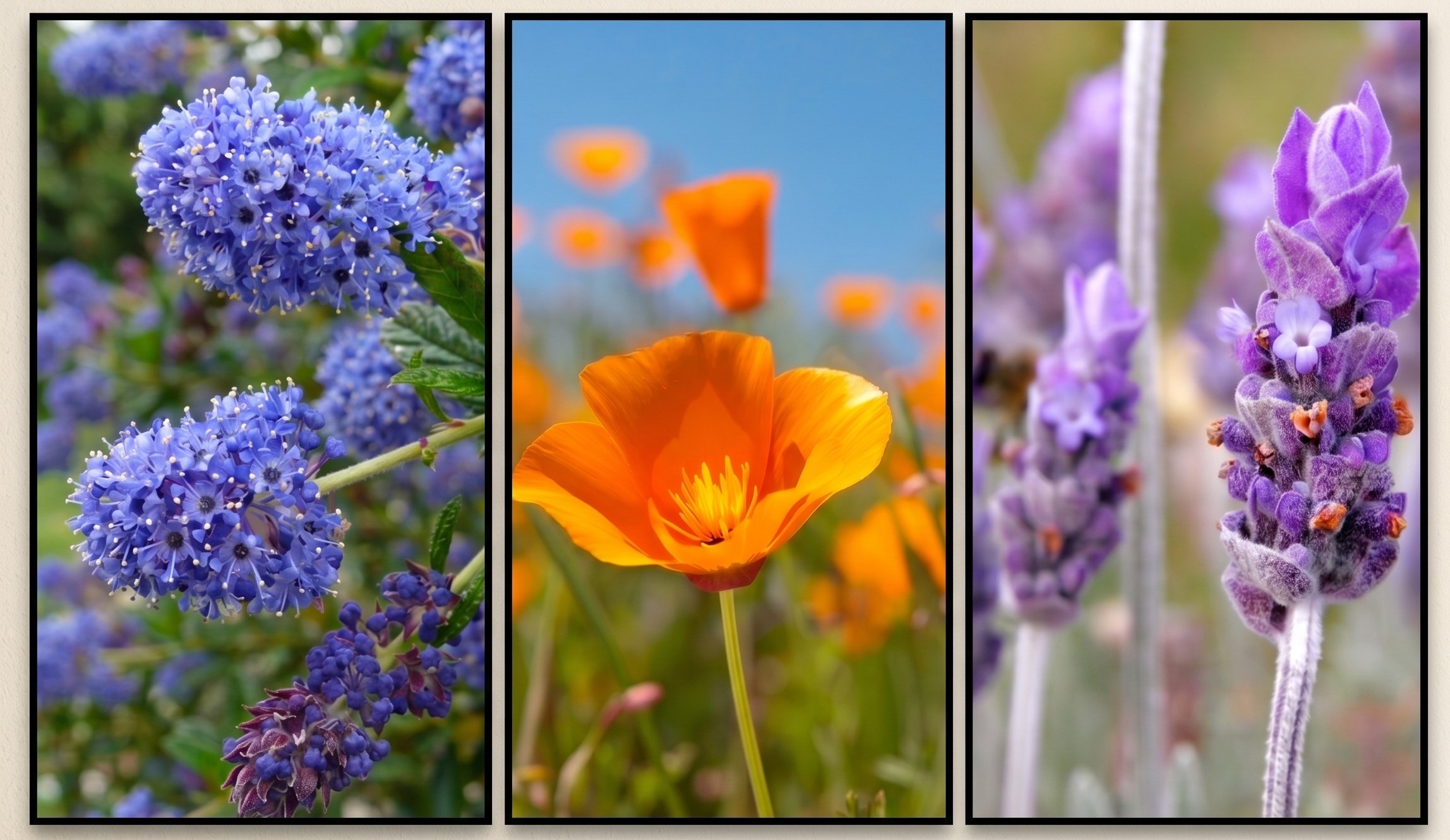
Quick answer: The top drought-tolerant plants for San Jose are California Poppy, Ceanothus, Manzanita, Toyon and Deer Grass. All five thrive in the region’s Mediterranean climate, tolerate clay soil and need little to no summer water once established.
TL;DR: the best drought-tolerant plants for San Jose yards are:
- California Poppy, Ceanothus, Lavender, Manzanita, Toyon
- Deer Grass, California Buckwheat, Yarrow, Salvia, Rosemary
- California Fuchsia, Coyote Mint, Western Redbud, Rock Rose, Agave
These plants suit San Jose’s Mediterranean climate (hot, dry summers; mild, wet winters), need minimal irrigation once established, and replace the watering a lawn needs with a deep soak now and then. At Landscape Associates of CA, we design and install planting plans built around species that fit San Jose’s soil, sun exposure and water realities, and plants carry our warranty of up to 1 year. Learn more about our landscaping services in San Jose.
On this page
- California Poppy
- Ceanothus / California Lilac
- Lavender
- Manzanita
- Toyon / Christmas Berry
- Deer Grass
- California Buckwheat
- Yarrow
- Salvia / Sage
- Rosemary
- California Fuchsia
- Coyote Mint
- Western Redbud
- Rock Rose
- Agave
Why Drought-Tolerant Plants Matter in San Jose
Drought-tolerant planting is one of the smartest ways to landscape in San Jose because the climate, the soil and the water rules all push in the same direction. San Jose summers are long, hot and dry, winters are mild and wet, and most of the year’s rain falls in a few months. That means high summer evaporation, long dry stretches and a constant need to think about water efficiency.
Many San Jose neighborhoods also have heavy clay soil, which creates a second challenge. In winter, clay holds water longer than lighter soils. In summer, it dries hard and can become compacted. Some plants handle that cycle well. Others need better drainage or amended planting areas to avoid root problems. That is one reason plant selection matters so much here.
Water conservation also has a direct effect on landscape design in Santa Clara County. Valley Water’s landscape rebate pays homeowners to replace lawn with lower-water planting and more efficient irrigation, and its rules decide what counts, so the plant list and the irrigation plan are worth settling together.
There is also a broader upside. Drought-tolerant landscapes support pollinators, reduce runoff, need fewer chemical inputs, and hold up better through water restrictions and hot weather. If you are also budgeting for a broader outdoor project, see our guide to landscaping cost in San Jose.
Quick Comparison: 15 Drought-Tolerant Plants for San Jose
| Plant | Mature size | Sun | Water needs | Clay tolerance | Bloom season |
|---|---|---|---|---|---|
| California Poppy | 12 to 18 in | Full sun | Very low | Good | Spring to early summer |
| Ceanothus | 1 to 6+ ft | Full sun | Very low | Poor, needs drainage | Spring |
| Lavender | 2 to 3 ft | Full sun | Low | Poor, needs drainage | Summer |
| Manzanita | 1 to 15 ft | Full sun | Very low | Fair, needs drainage | Winter to spring |
| Toyon | 8 to 15 ft | Full sun to part shade | Low | Excellent | Late spring (berries in winter) |
| Deer Grass | 3 to 4 ft | Full sun | Low | Good | Summer to fall plumes |
| California Buckwheat | 2 to 3 ft | Full sun | Very low | Good | Summer to fall |
| Yarrow | 1 to 3 ft | Full sun | Low | Good | Spring to summer |
| Salvia / Sage | 1 to 5 ft (varies) | Full sun | Low | Good (natives) | Spring to fall |
| Rosemary | 2 to 4 ft | Full sun | Very low | Fair | Winter to spring |
| California Fuchsia | 1 to 3 ft | Full sun | Very low | Fair | Late summer to fall |
| Coyote Mint | 1 to 2 ft | Full sun to part shade | Low | Fair | Summer |
| Western Redbud | 10 to 15 ft | Full sun to light shade | Very low | Good | Early spring |
| Rock Rose | 3 to 5 ft | Full sun | Very low | Good | Spring to summer |
| Agave | Varies widely | Full sun | Very low | Poor, needs sharp drainage | Rare, mature plants only |
Water-need definitions: “Very low” = no summer water once established; “Low” = occasional deep watering in the hottest months; “Moderate” = monthly deep watering in the dry season.
15 Drought-Tolerant Plants That Thrive in San Jose
California Poppy (Eschscholzia californica)
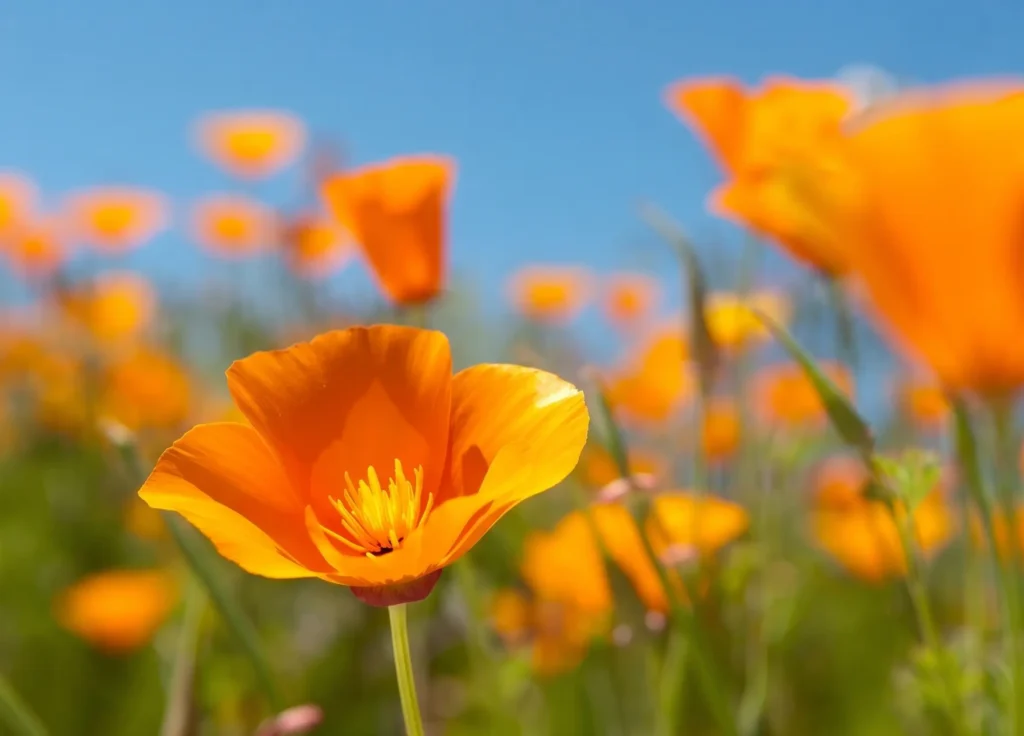
California Poppy is one of the easiest drought-tolerant plants for San Jose yards and also the state flower. This reseeding annual typically grows 12 to 18 inches tall, blooms from spring into early summer, and handles full sun with almost no supplemental water once established. It performs well in sunny borders, wildflower meadows and slopes, and supports pollinators. A common mistake is over-amending the soil. It performs better when left a little lean.
Ceanothus / California Lilac (Ceanothus spp.)
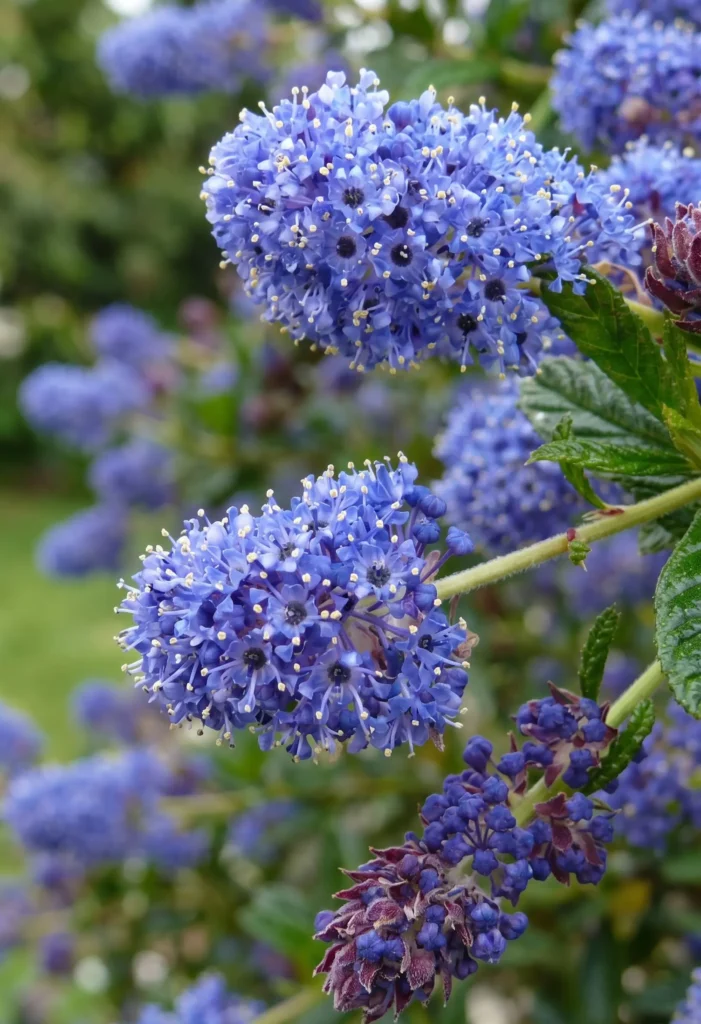
Ceanothus is one of the best evergreen shrubs for bold spring color in a low-water landscape. Depending on the variety, it can range from a low groundcover to a shrub over 6 feet tall, and it produces blue to purple flowers that pollinators love. It wants full sun and little to no summer water after establishment. Varieties like ‘Yankee Point’ and ‘Concha’ are strong choices for Bay Area landscapes. The key in San Jose is drainage. Ceanothus does not like clay soil that stays wet, so it should be planted in well-drained areas or on slight mounds rather than low, soggy pockets.
Lavender (Lavandula spp.)
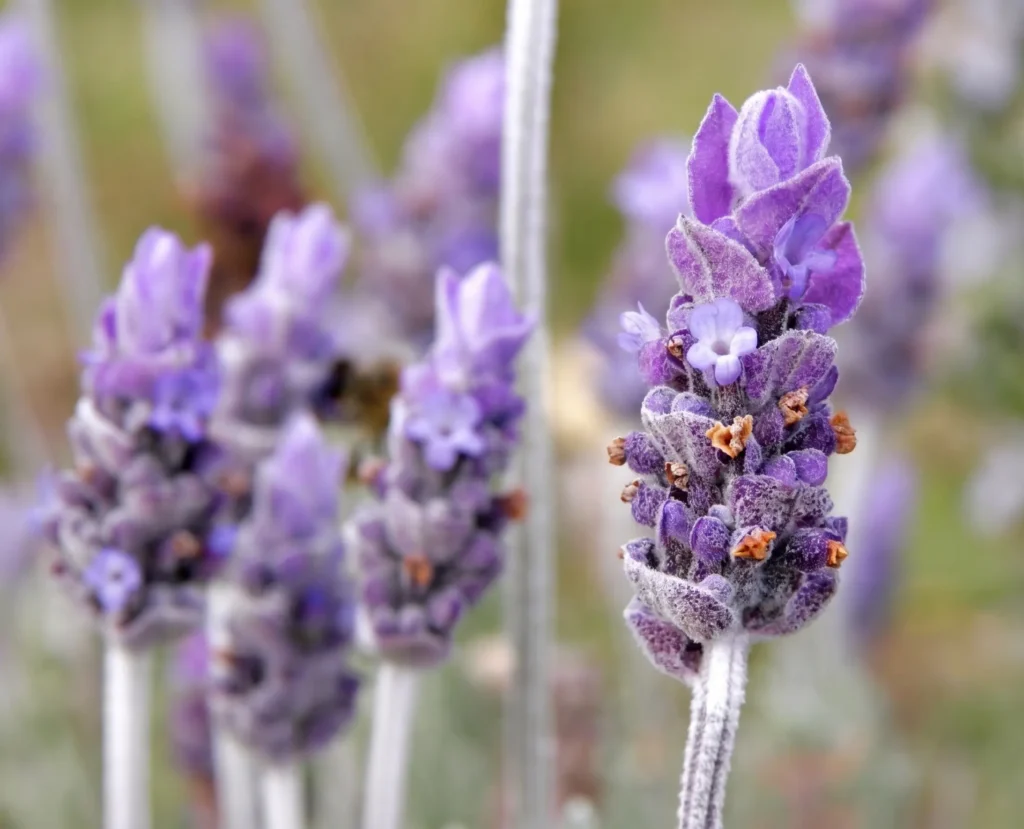
Lavender is a reliable San Jose performer when it gets sun and drainage. This evergreen perennial usually grows 2 to 3 feet tall and wide, needs full sun, and only needs minimal water once established. It works well along pathways, in borders, near patios and in front-yard planting. Lavender also attracts bees and butterflies and adds fragrance near seating areas and walkways. Like Ceanothus, it dislikes soggy clay, so drainage matters.
Manzanita (Arctostaphylos spp.)
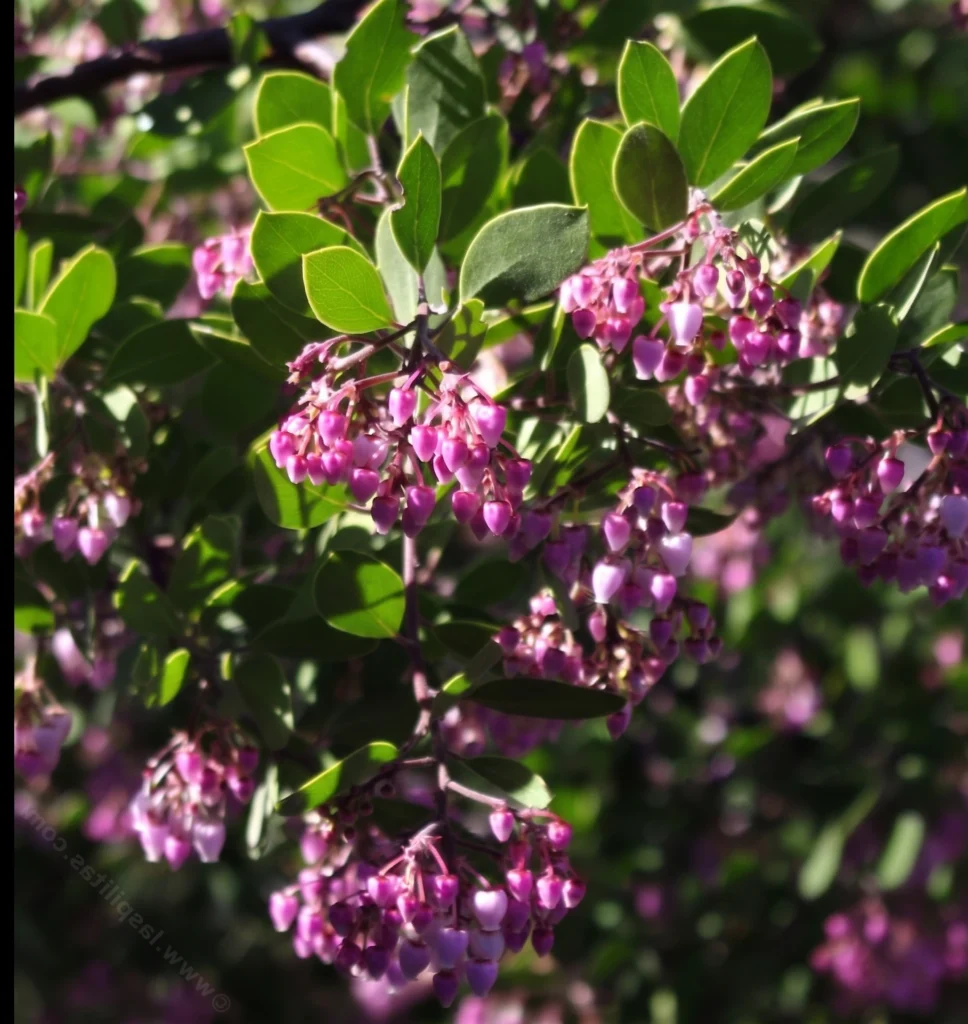
Manzanita is a California native evergreen known for smooth red bark, sculptural branching and small urn-shaped flowers. Depending on species and cultivar, it can stay low or grow into a shrub large enough for screening. Most types want full sun and no summer water once established. It works well as a specimen, hedge or natural-style screen. In San Jose, manzanita is especially useful on slopes and in places where you want strong year-round form without high water use.
Toyon / Christmas Berry (Heteromeles arbutifolia)
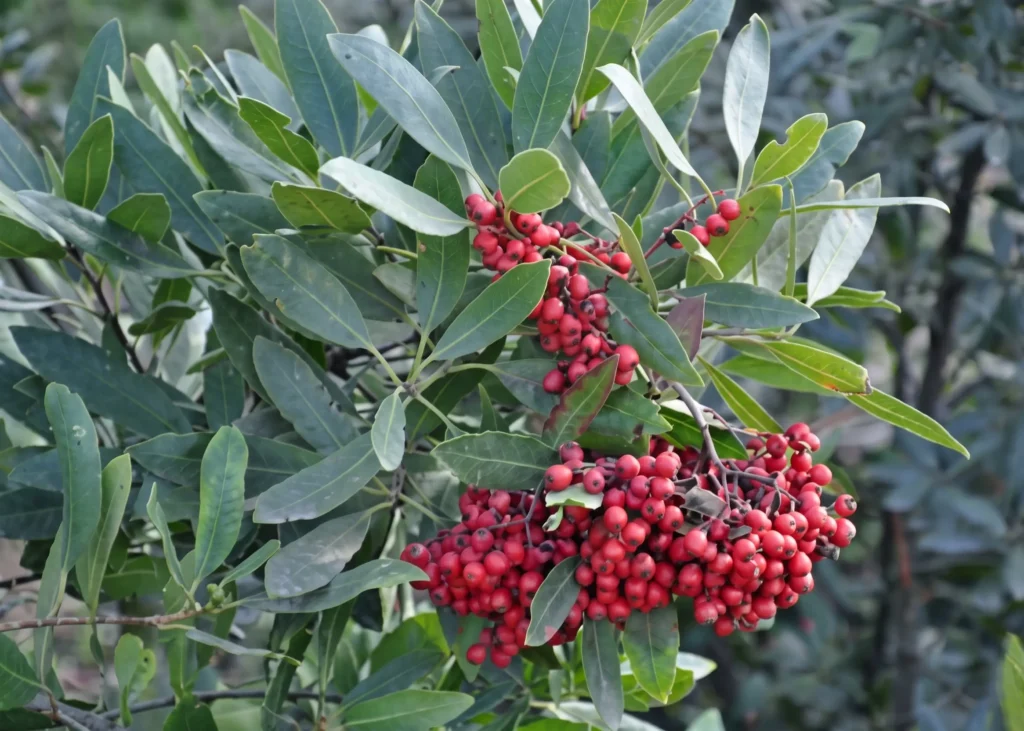
Toyon is a tough California native shrub or small tree that handles San Jose conditions well, including heavier soils. It typically grows 8 to 15 feet tall, takes full sun to part shade, and needs only occasional water after establishment. White flowers appear in late spring, followed by red berries in winter that attract birds and support wildlife. It works well for screening, slope planting and habitat-focused landscapes. In San Jose, Toyon is one of the safer native choices for clay soil, which makes it useful in yards where more drainage-sensitive natives would struggle.
Deer Grass (Muhlenbergia rigens)
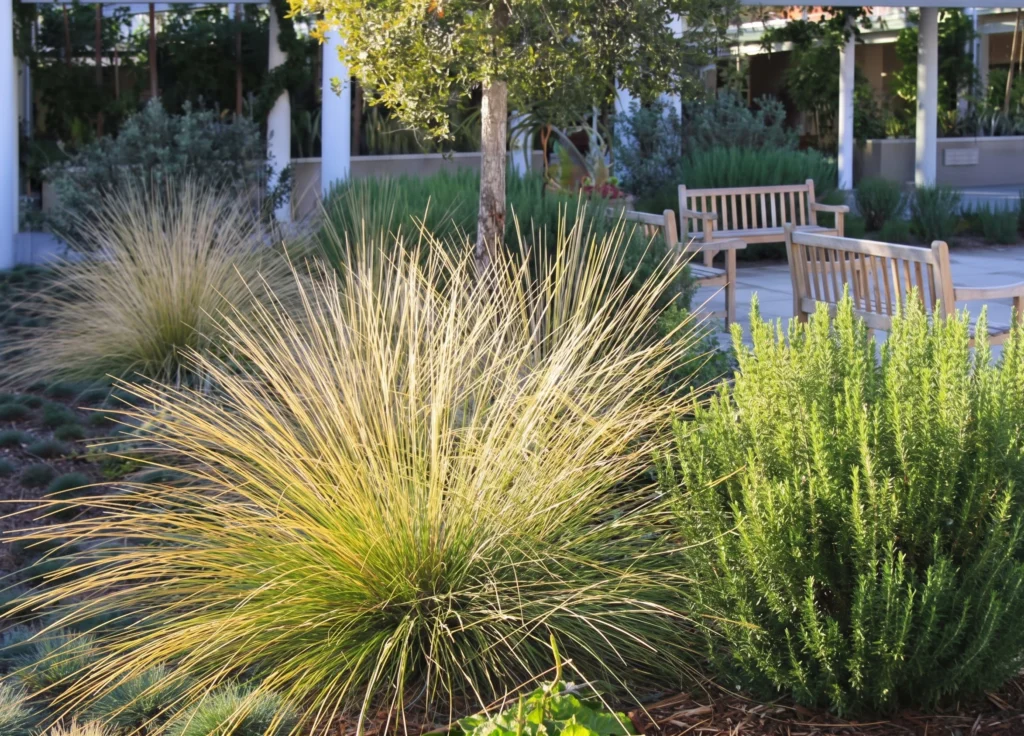
Deer Grass is one of the best replacements for thirsty ornamental grasses in San Jose. This California native forms a large fountain-shaped clump about 3 to 4 feet tall, with airy flower plumes that rise above the foliage. It wants full sun and minimal water once established. It works well as a border accent, mass planting or transition plant between hardscape and shrub areas. It also tolerates clay better than many people expect. In San Jose landscapes, Deer Grass helps soften pavers, walls and modern designs without adding a heavy irrigation load.
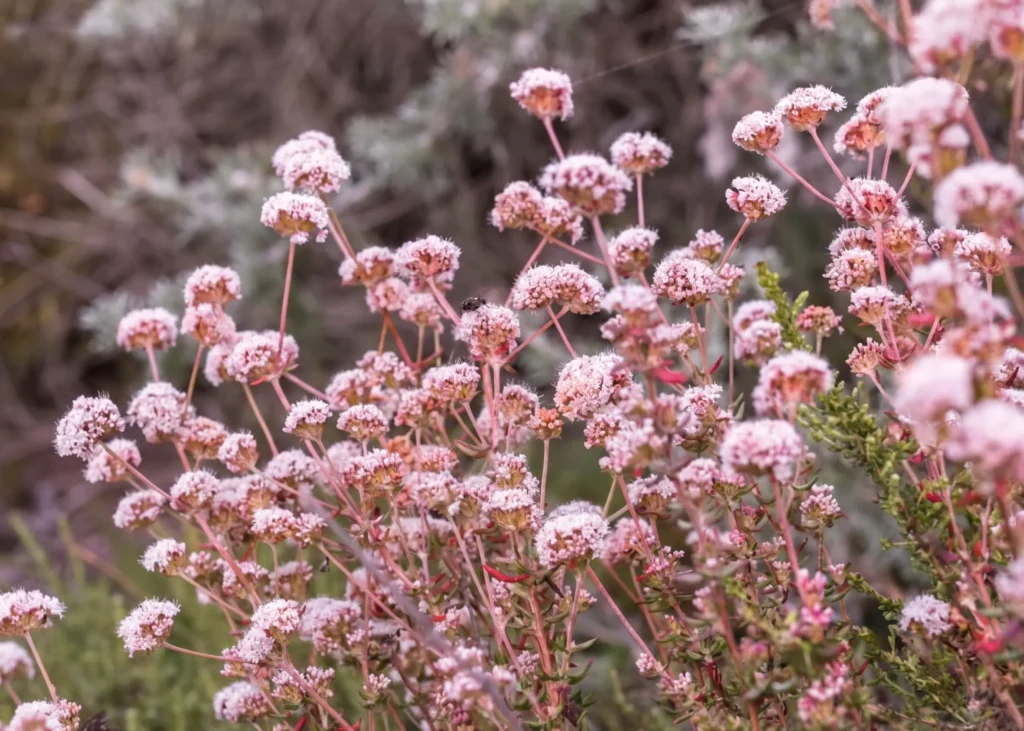
California Buckwheat (Eriogonum fasciculatum)
California Buckwheat is one of the best pollinator plants for a dry yard. This low native shrub usually reaches about 2 to 3 feet tall, takes full sun, and needs little to no supplemental water once established. Its white to pink flower clusters age to a warm rust color, giving it a longer visual season than many flowering plants. It is a strong choice for slopes, wildflower-style gardens and native-focused landscapes. In San Jose, it also tolerates clay soil better than many natives, which makes it a safer choice for yards with heavier ground conditions.
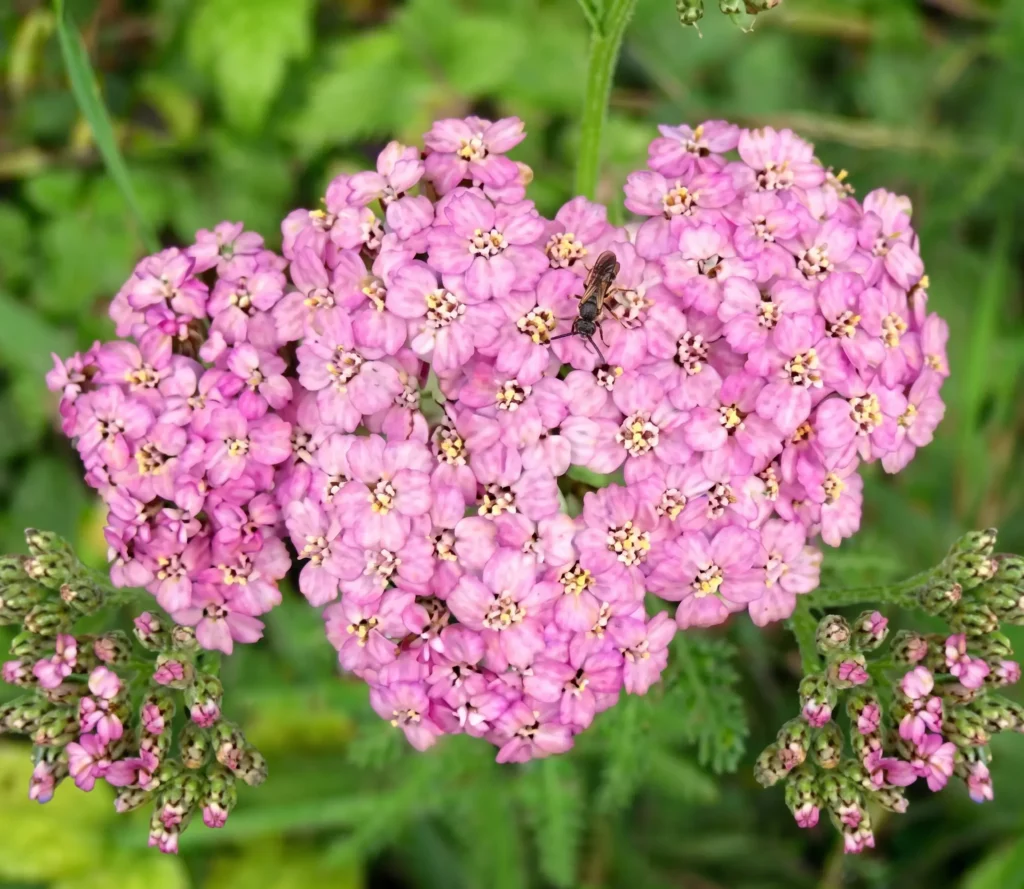
Yarrow (Achillea spp.)
Yarrow is a durable perennial that brings long bloom time and groundcover value to lower-water landscapes. It usually grows 1 to 3 feet tall, depending on the type, with flat-topped flowers in white, yellow or pink. It likes full sun and needs only minimal water after establishment. Native forms of Achillea millefolium do especially well in California-style gardens. Yarrow spreads by rhizomes, so it can fill in open space and reduce bare soil. In San Jose, that makes it useful for informal planting, meadow effects and erosion control in sunny areas.
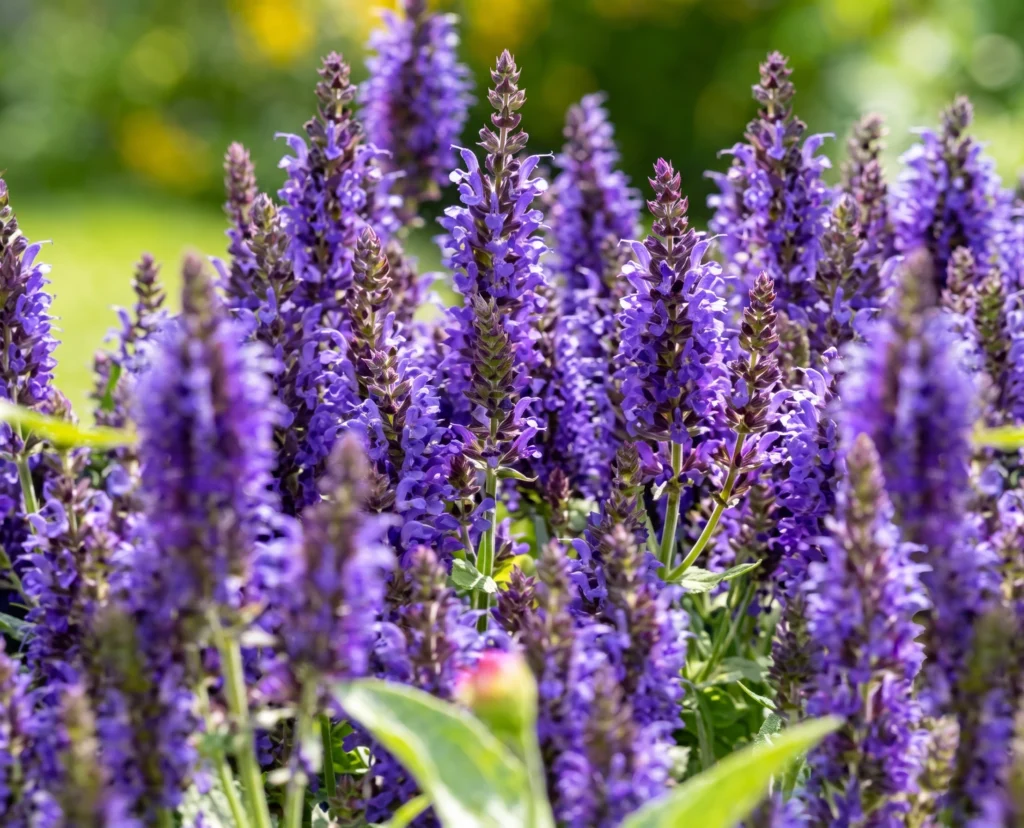
Salvia / Sage (Salvia spp.)
Salvia is one of the most dependable plant groups for San Jose because there are so many forms that work in different designs. Some are shrubby, some are mounding, and some spread low across the ground. Most need full sun and minimal water, and many attract hummingbirds. ‘Bee’s Bliss’ is a strong groundcover option, while ‘Hot Lips’ adds longer-season color. Several California native salvias also handle clay soil better than other drought-tolerant plants. In San Jose landscapes, salvias are often used to layer color and texture without raising water demand.
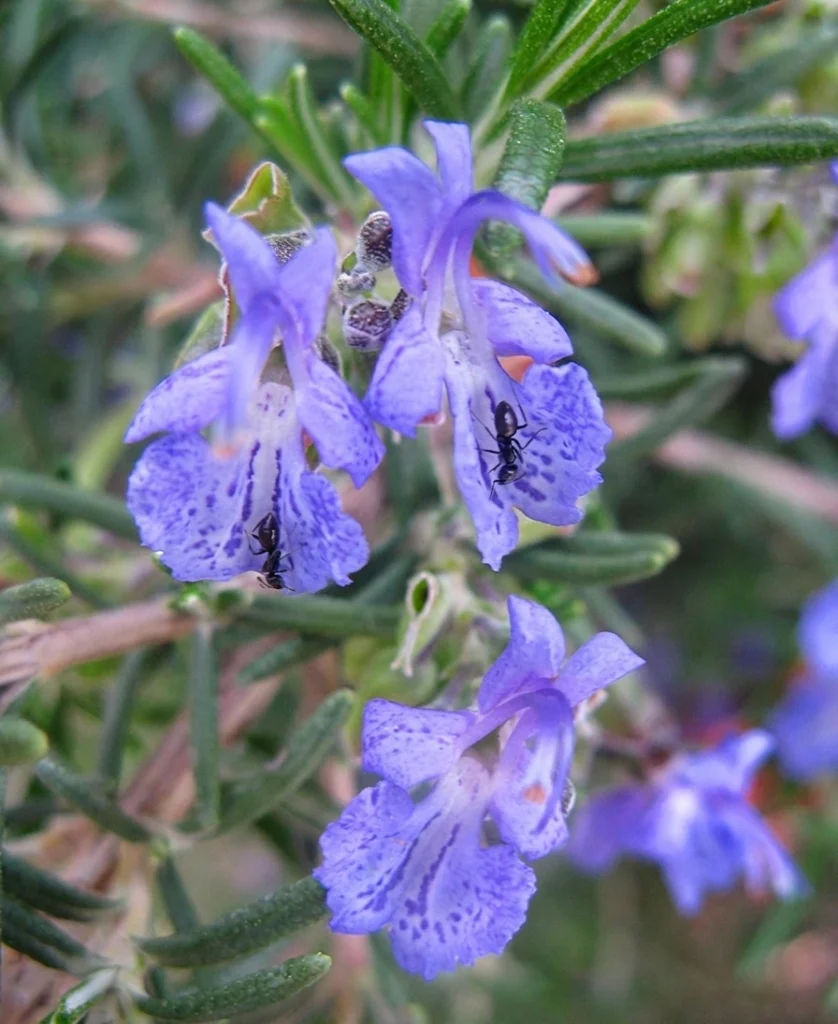
Rosemary (Salvia rosmarinus)
Rosemary is one of the most versatile drought-tolerant plants for San Jose yards. It is evergreen, edible, fragrant and highly durable once established. Upright forms can be used as low hedges, while trailing forms like ‘Prostratus’ work as groundcover over walls and slopes. It likes full sun and needs minimal water. In San Jose, rosemary handles heat well and performs with very little fuss once rooted in. It is especially useful in front-yard landscapes where homeowners want something clean, structured and low-maintenance that still has year-round value.
California Fuchsia (Epilobium canum)
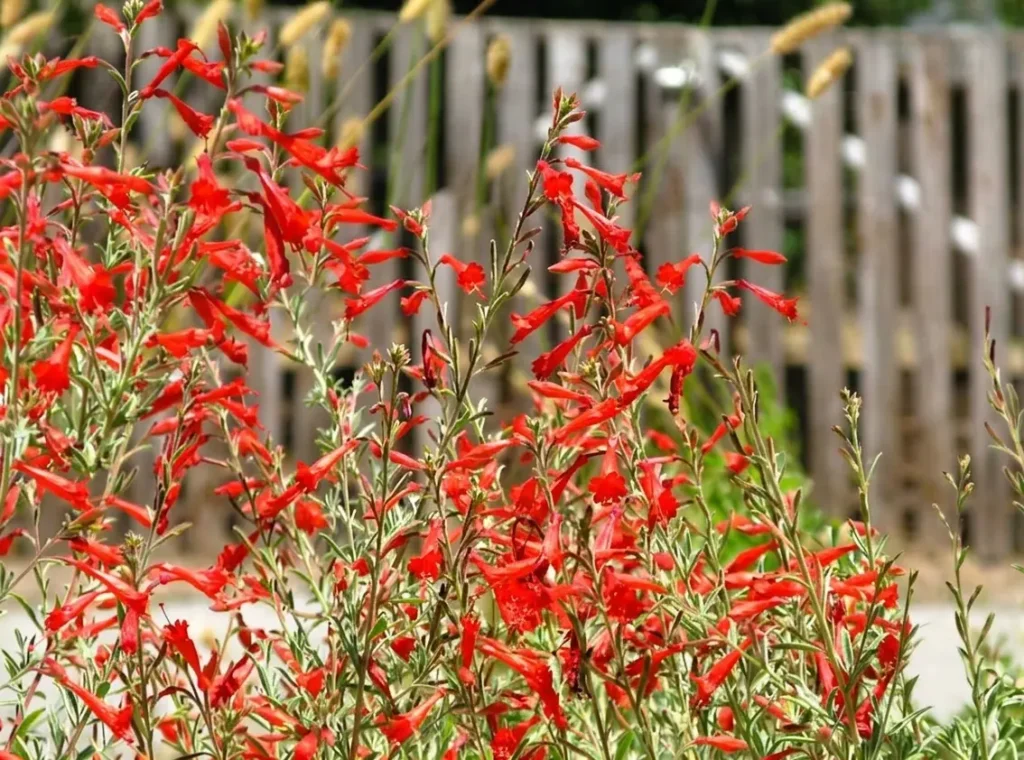
California Fuchsia is one of the best late-season color plants for a San Jose dry garden. This perennial usually grows 1 to 3 feet tall, thrives in full sun, and needs little to no summer water once established. Its red-orange tubular flowers show up late in the season and are excellent for hummingbirds. It works especially well on slopes, in rock gardens or in mixed native planting. In San Jose, California Fuchsia is useful for extending bloom time into late summer and fall, when many other drought-tolerant plants are quieting down.
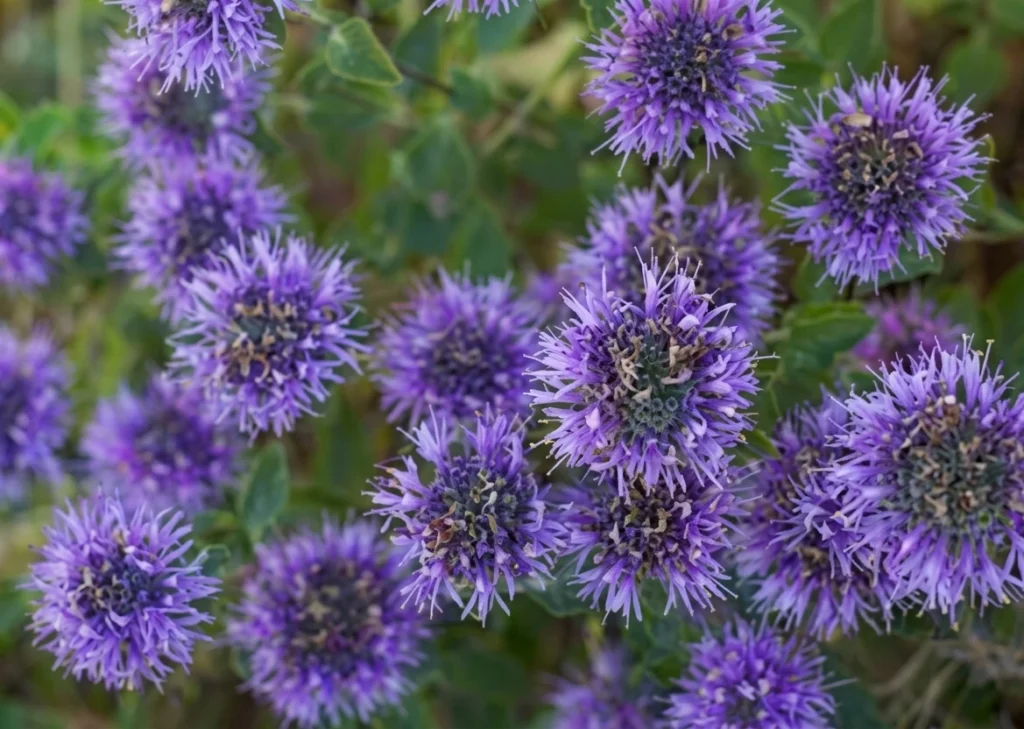
Coyote Mint (Monardella villosa)
Coyote Mint is a California native perennial with aromatic foliage and rounded lavender flower clusters. It typically grows 1 to 2 feet tall, does well in full sun to part shade, and needs only minimal water after establishment. It is a strong option for pollinator gardens, borders and smaller planting pockets where texture and scent matter. In San Jose, it works well in native-leaning designs and can be paired with grasses, salvias and buckwheat for a layered, lower-water look that still feels soft and inviting.
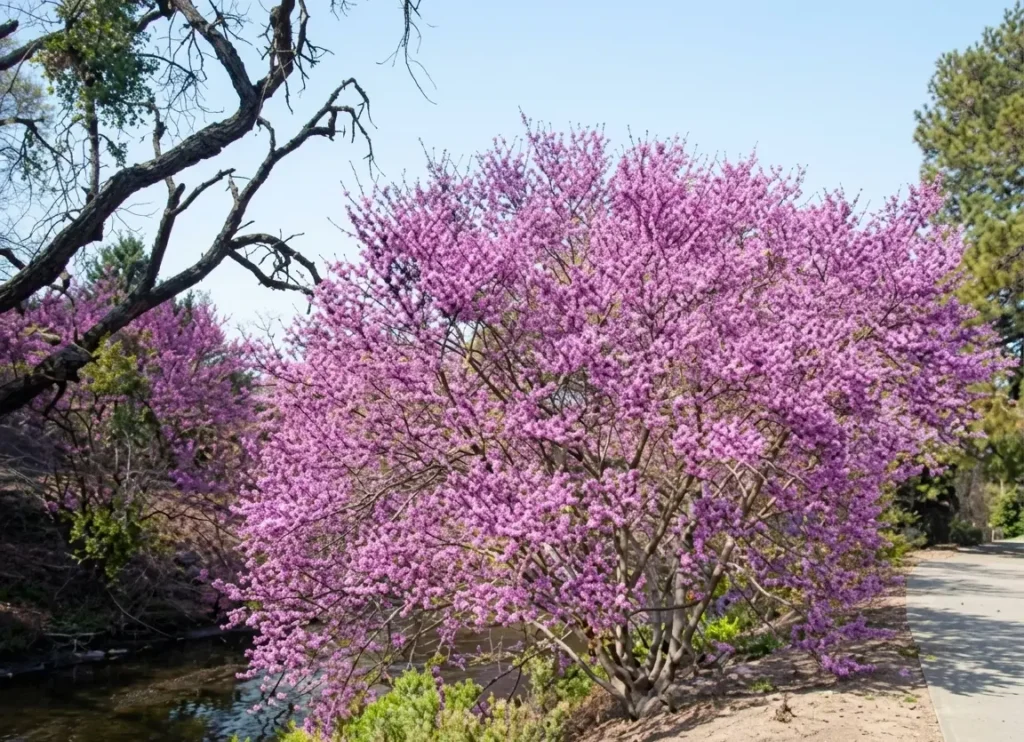
Western Redbud (Cercis occidentalis)
Western Redbud is one of the best small trees for a drought-tolerant San Jose front yard. It usually grows 10 to 15 feet tall, blooms with vivid magenta flowers in early spring before leaf-out, and needs very low water once established. It wants full sun for best flowering, though it can handle some light shade. It is a strong fit for accent planting, entry-area focal points and native-style designs. In San Jose, it provides seasonal drama without requiring the irrigation that many ornamental trees demand.
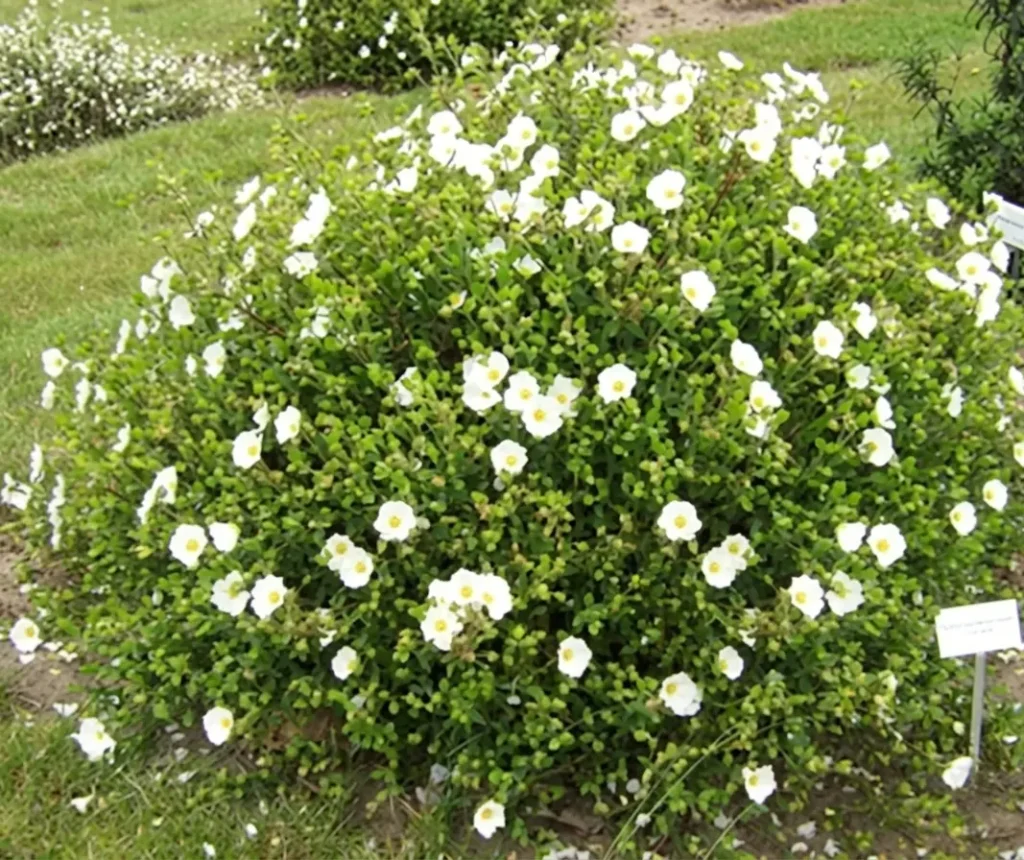
Rock Rose (Cistus spp.)
Rock Rose is a Mediterranean shrub that fits San Jose’s climate well. It typically reaches 3 to 5 feet tall, needs full sun, and once established can get by on little to no summer water. It has papery flowers in white or pink and handles heat, poor soil and exposed conditions well. It is a good choice for slopes, foundation planting and low-water filler where you need an evergreen mass. In San Jose, Rock Rose is especially useful in hot sites where other shrubs burn out or need more attention.
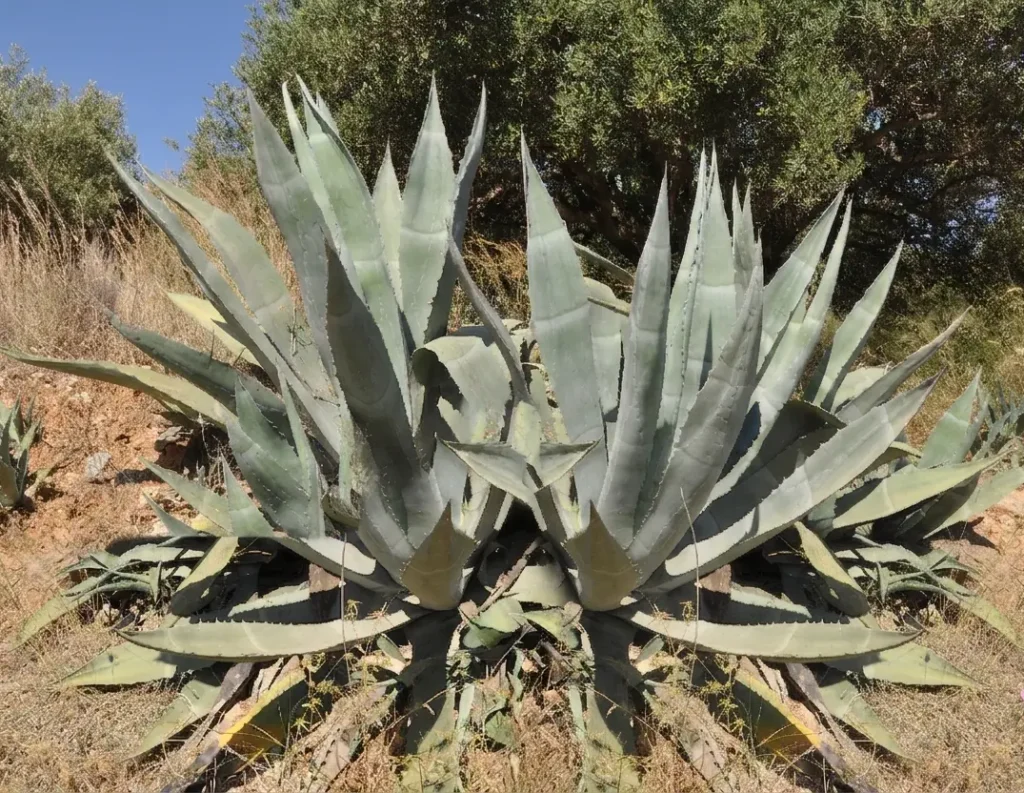
Agave (Agave spp.)
Agave is one of the most sculptural drought-tolerant options for San Jose. This evergreen succulent varies widely in size depending on species, and it needs virtually no supplemental water after establishment. It wants full sun and sharp drainage. Agave works best as a sculptural accent in modern landscapes, gravel gardens and xeriscape-style planting. In San Jose, it is a strong fit for contemporary front yards, especially when paired with gravel, mulch, boulders and paver installation.
For broader plant inspiration, homeowners can also review the UC Davis Arboretum All-Stars, Las Pilitas Nursery’s San Jose drought-tolerant plant guide and Cal Water’s low-water plant resources.
How to Design a Drought-Tolerant Yard in San Jose
A good drought-tolerant yard in San Jose is not just a plant list. It is a layout that groups water needs properly, protects the soil and leaves room for usable hardscape. The best results come from design decisions that make low-water planting easier to maintain over time.
Start with hydrozoning, which means grouping plants with similar water needs together. This matters for efficiency, plant health and long-term maintenance. Mixing thirsty plants into a dry-garden zone usually results in either overwatering the dry-loving species or underwatering the thirsty ones.
Use 3 to 4 inches of mulch across planting areas. Mulch reduces evaporation, suppresses weeds and moderates soil temperature. It also gives the yard a finished look between plants while they fill in.
Design the irrigation around drip zones rather than overhead spray. Drip puts the water at the root zone instead of into the air and onto paving, and Valley Water pays a rebate of $0.25 per square foot on in-line drip conversion in planting beds, with its other equipment rebates listed on the same page (checked October 2026). Our irrigation work carries a 2-year warranty.
In San Jose, fall planting is usually best, especially in October and November. Roots can establish during the cooler season and take advantage of winter rain before the next summer arrives.
Valley Water Rebates for Lawn Replacement in San Jose
Valley Water rebates can make drought-tolerant landscaping more affordable, but the application timing matters. The key point is simple: the Notice to Proceed has to be issued before work begins or any equipment is bought, and the lawn has to still be there for the pre-inspection.
Through the Valley Water Landscape Rebate, qualifying homeowners receive $2 per square foot for replacing lawn with approved low-water planting, with a combined lifetime cap of $3,000 per residential site across all rebate types. Customers of San Jose Municipal Water, which serves only part of San Jose, get $3 per square foot for the first 1,000 square feet and $2 after that, capped at $4,000; check your address with Valley Water’s retailer lookup. The program is funded to June 30, 2027 or until funds run out (checked October 2026). Artificial turf does not qualify.
The biggest mistake homeowners make is assuming they can apply after the project is done. Pre-inspection and program approval are required before installation starts. If that step is missed, the project will not qualify even if the finished landscape would otherwise meet the rules.
If you are considering lawn replacement, we design the planting layout to fit San Jose conditions and to line up with Valley Water’s requirements, and we size the drip irrigation to the plant list. See our landscaping services in San Jose for project planning support.
Drought-Tolerant Planting FAQ
What is the best time to plant drought-tolerant plants in San Jose?
The best time is fall, especially October through November. That gives roots time to establish during the cooler season and benefit from winter rainfall before the next dry summer. Spring planting can still work, but it usually requires more irrigation and closer monitoring during the first warm months.
Do drought-tolerant plants need any water in San Jose?
Yes. Most drought-tolerant plants still need supplemental water during their first 1 to 2 growing seasons. Deep watering every 2 to 4 weeks during establishment is common, depending on plant type, soil and weather. After that, many can transition to very low water use if they were planted correctly.
Will drought-tolerant plants grow in San Jose’s clay soil?
Yes, many drought-tolerant plants grow well in San Jose’s clay soil. The best clay-tolerant choices are Toyon, Deer Grass, California Buckwheat and several native Salvias. Plants that need sharper drainage, including Ceanothus, Lavender and Manzanita, should be planted on mounds or in amended beds. In heavy-clay yards, drainage correction often matters more than plant selection, and we handle drainage corrections first when the site needs them.
How much can I save on water with drought-tolerant landscaping?
A lawn needs watering several times a week through a San Jose summer; established drought-tolerant plants on drip need a deep soak now and then, and the “very low” plants in the table above need none. How much that cuts your bill depends on the lawn area removed, the irrigation you keep and how the plants are zoned. Valley Water pays its rebate on the conversion itself, $2 per square foot up to the cap, which is the saving you can count on before the first summer.
How much does it cost to replace a lawn with drought-tolerant plants in San Jose?
Garden bed and planting projects in San Jose run from about $2,000 to $5,000, depending on the area, the plant sizes and whether the old lawn and irrigation come out. Against that, the Valley Water rebate returns $2 per square foot of lawn converted ($3 for the first 1,000 square feet for San Jose Municipal Water customers), up to the $3,000 cap, provided the Notice to Proceed is issued before work starts (checked October 2026).
Get Help Designing Your Drought-Tolerant Yard in San Jose
If you want help choosing the right mix of natives, low-water ornamentals and hardscape, call or text (408) 207-5545 for a free on-site estimate; we reply within 24 hours. You can also explore our landscaping services in San Jose or learn more about plant and tree installation. We serve Willow Glen, Almaden Valley, Evergreen, Rose Garden, Berryessa and the surrounding San Jose neighborhoods, plus Saratoga, Los Gatos and Los Altos.
Get in Touch
Call us, send the estimate form, or email us. We reply within 24 hours to book a free site visit. Call or text (408) 207-5545.
- (408) 207-5545
- david@landscapeassociatesca.com
- Mailing address: 125 Surf Way #443, Monterey, CA 93940
- Mon - Fri: 8:00-5:00 · Closed on weekends