Founded in 1987 by David Muhoberac
Landscape Design and Construction from San Jose to Carmel
Residential and commercial landscape installation and ongoing maintenance in seven cities from San Jose to Carmel.
- Since 1987
- Yelp 4.6 (46 reviews)
- Google 5.0 (8 reviews)
- Fully insured
Founded 1987 by David Muhoberac
Fully insured with itemized pricing
Replies within 24 hours; free estimate
In brief
Landscape Associates of CA provides landscape construction, pavers, retaining walls, turf and drainage from San Jose to Carmel. Our published San Jose guide puts full backyard renovations at $25,000 to $75,000+. Founded in 1987, we are fully insured and offer a free on-site estimate with itemized project pricing.
Updated October 2026
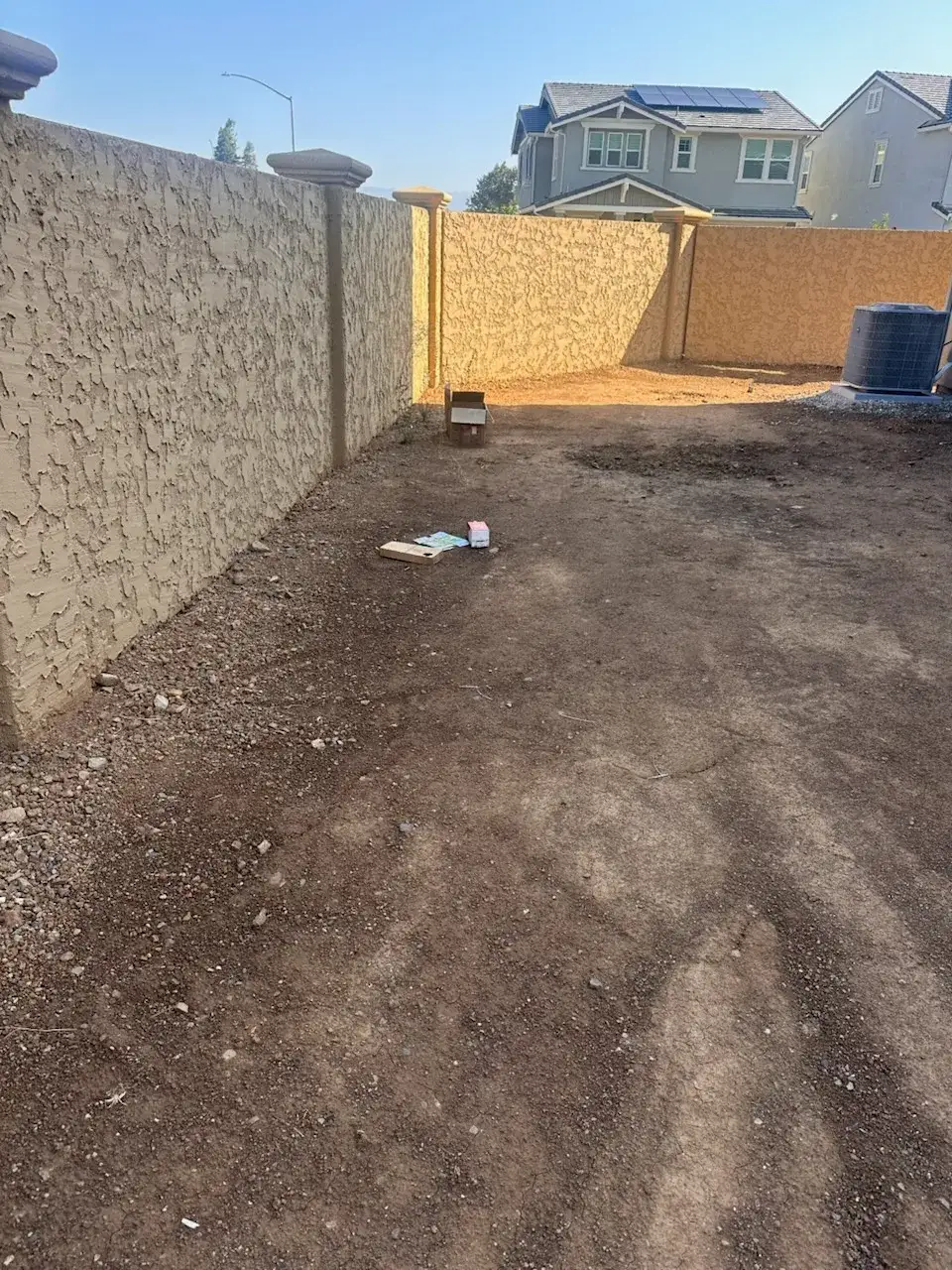
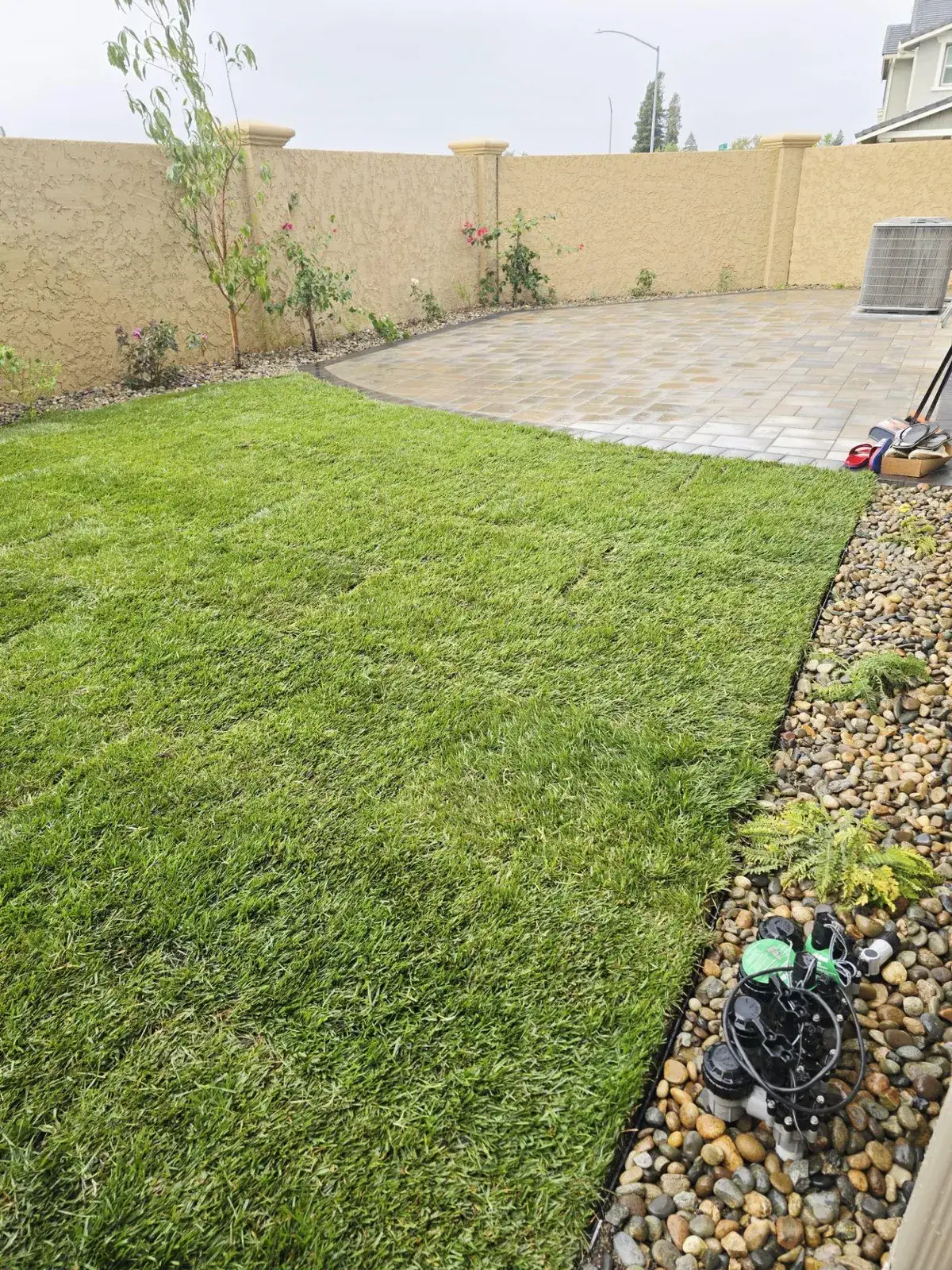
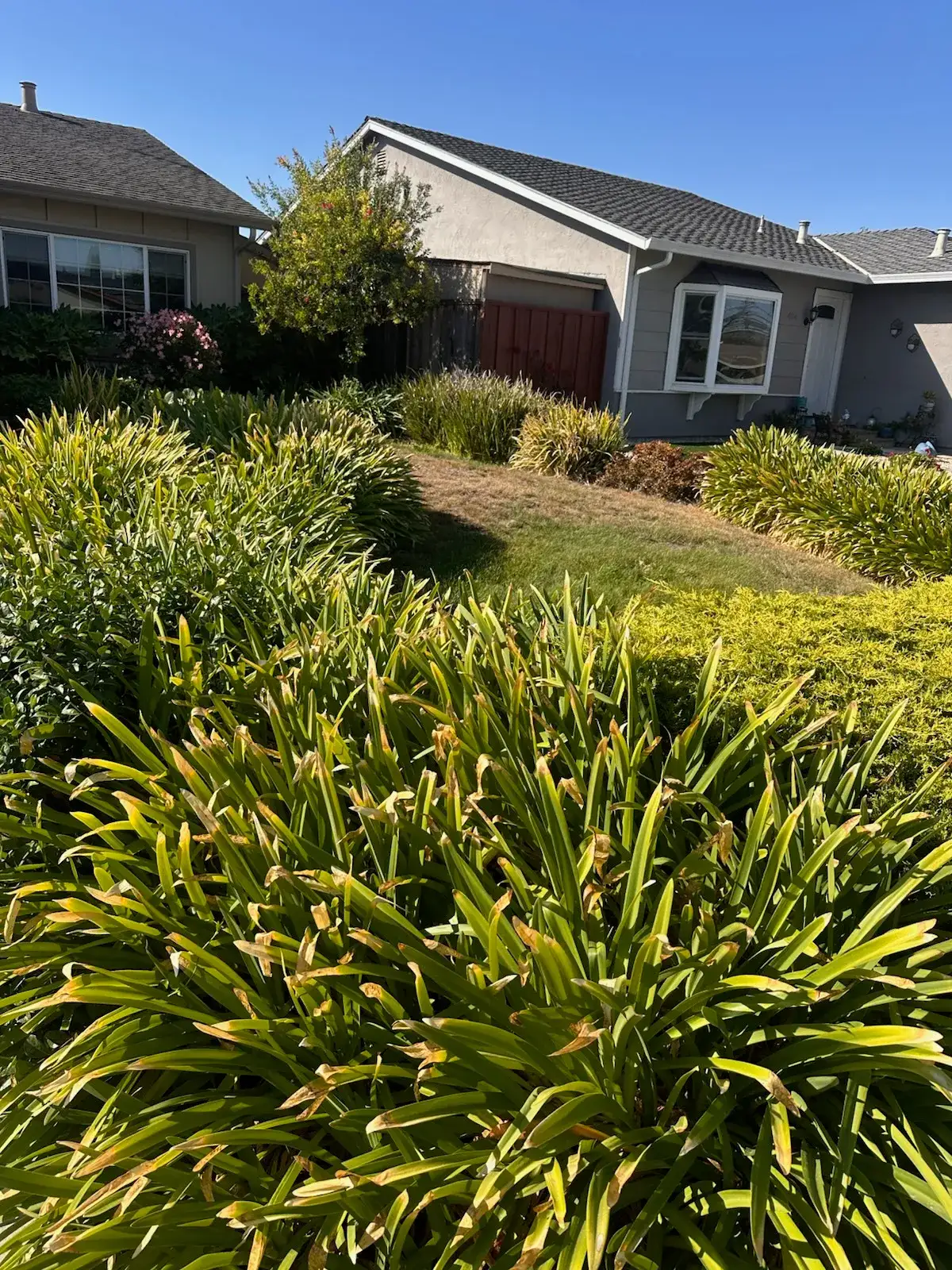
Before and After
Landscape installation and care since 1987
David Muhoberac founded Landscape Associates of CA in 1987 to provide landscaping for homes and commercial properties. Today our installation and maintenance services cover San Jose, Saratoga, Los Gatos, Los Altos and Los Altos Hills, and Monte Sereno; Campbell, Cupertino and Sunnyvale are nearby.
On the Monterey Peninsula, we serve Monterey and Carmel, including Carmel Valley and Pebble Beach. A project can include paving, walls, planting and landscape systems or focus on a single part of the yard. David also handles the landscape design, laying out the yard with you at the estimate or building from your designer's plans. We provide itemized pricing for each residential and commercial project.
- Itemized project costsOur free on-site estimate identifies the work involved and lists the cost of each item.
- Service-specific warrantiesPavers have lifetime materials and workmanship coverage, artificial turf has 15 years, irrigation, lighting and drainage each have 2 years, and plants have up to 1 year.
- Named product brandsOur product brands include Belgard pavers, Hunter irrigation, Volt lighting and SYNLawn artificial turf.
- Ongoing landscape careWe offer ongoing maintenance as well as installation for residential and commercial landscapes.
Our landscaping and hardscaping services
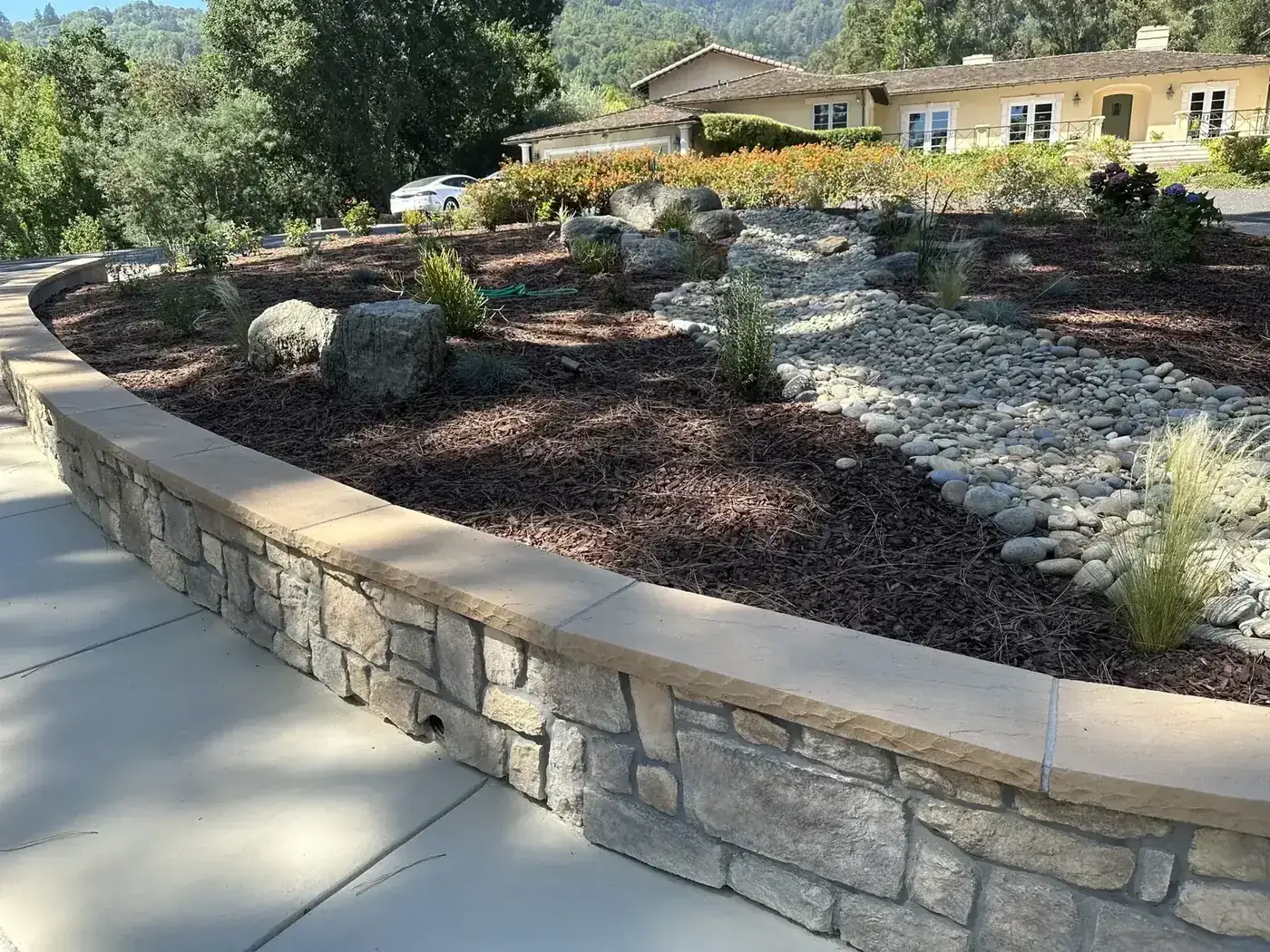
Retaining Walls
We build retaining walls with systems from Belgard, Techo-Bloc, Calstone and Basalite. Our published guides list about $50 to $100 per square face foot in San Jose and $60 to $120 on Saratoga hillsides.
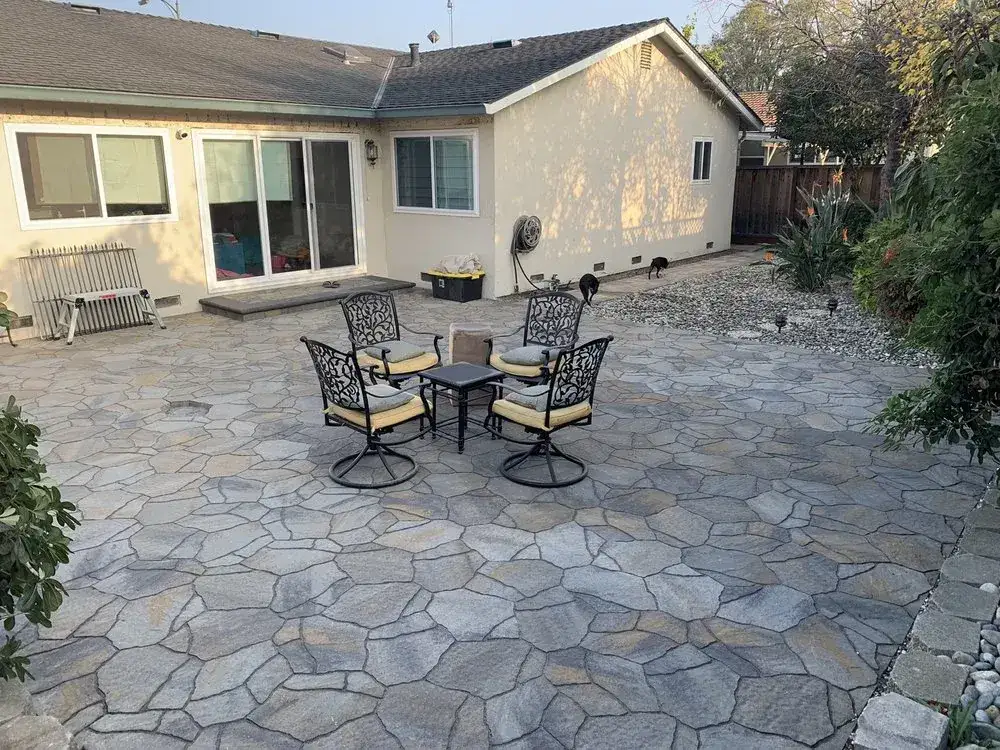
Pavers
Patios, paths and driveways use pavers from Belgard, Techo-Bloc, Calstone and Basalite, with lifetime coverage for materials and workmanship. In our published San Jose guide, paver patios cost about $15 to $30 per sq ft installed.
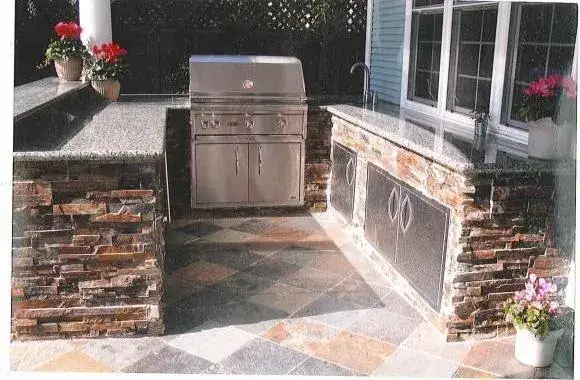
Outdoor Kitchens
We install outdoor kitchens. Our published Saratoga guide lists kitchen projects at about $15,000 to $50,000+ with appliances.
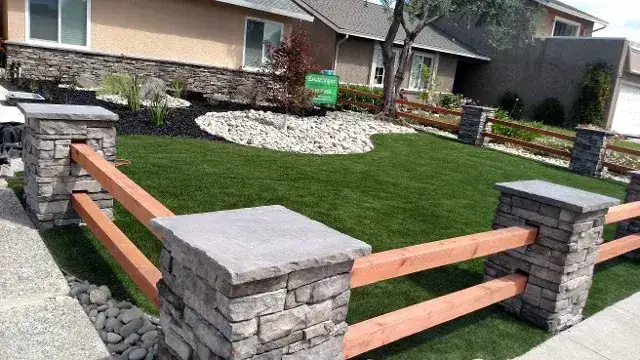
Artificial and Real Turf
We install living sod as well as artificial turf from SYNLawn and Purchase Green. Our published turf FAQ gives a California installation range of $8 to $15 per sq ft; our artificial turf warranty is 15 years.
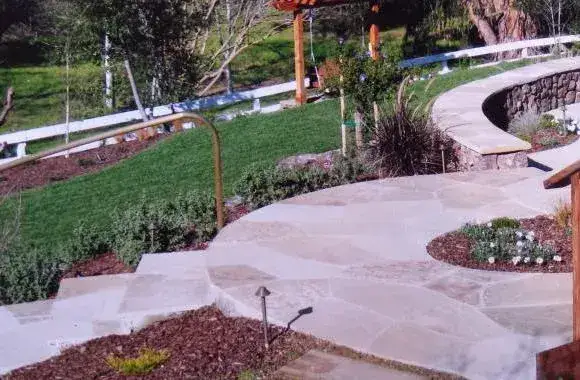
Concrete
We install concrete patios, walkways and driveways. Our free on-site estimate lists the individual costs for your concrete project.
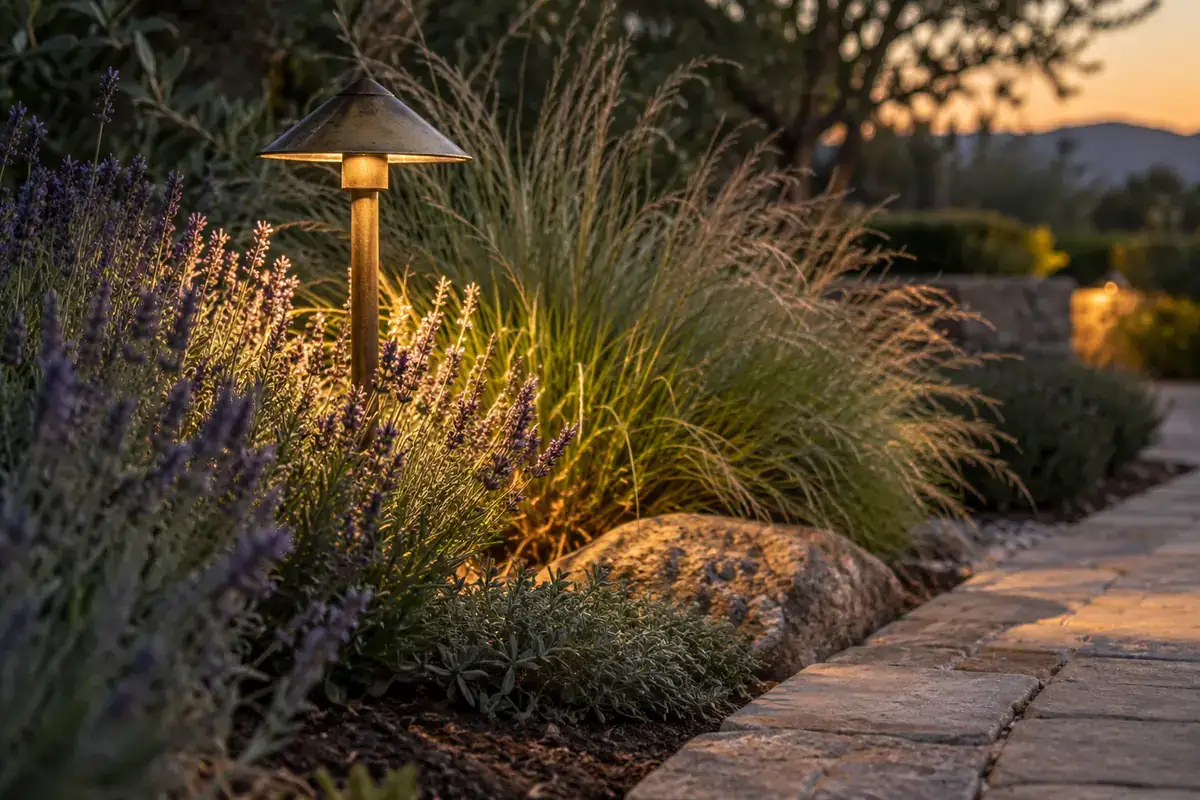
Outdoor Lighting
Volt, FX Luminaire and Kichler fixtures light paths and landscape features. Our published San Jose lighting range is $2,000 to $6,000, and lighting work carries a 2-year warranty.
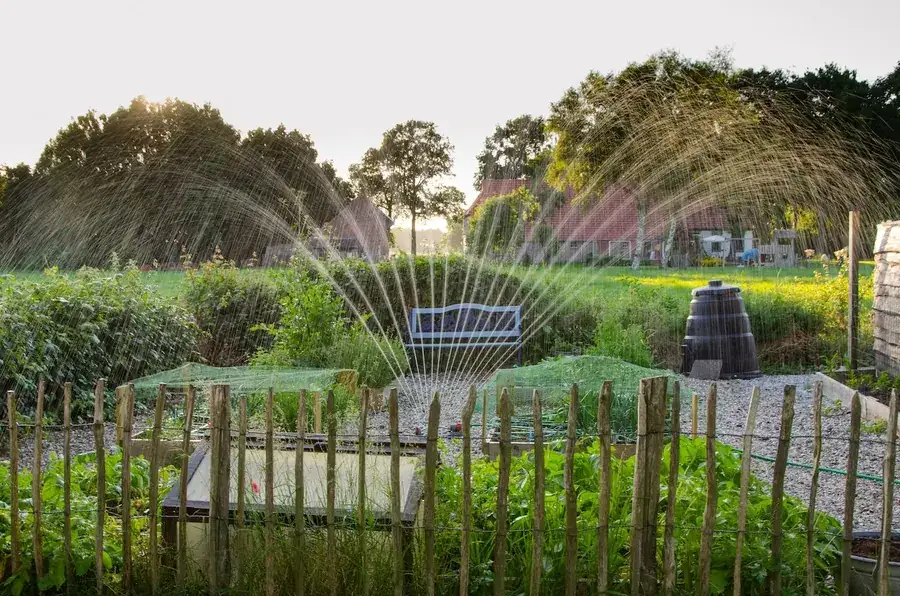
Irrigation
Watering systems use Rain Bird and Hunter products, with Rachio and Hunter Hydrawise smart controllers. Our published San Jose irrigation figure is $3,000 to $10,000, with 2 years of warranty coverage for irrigation.
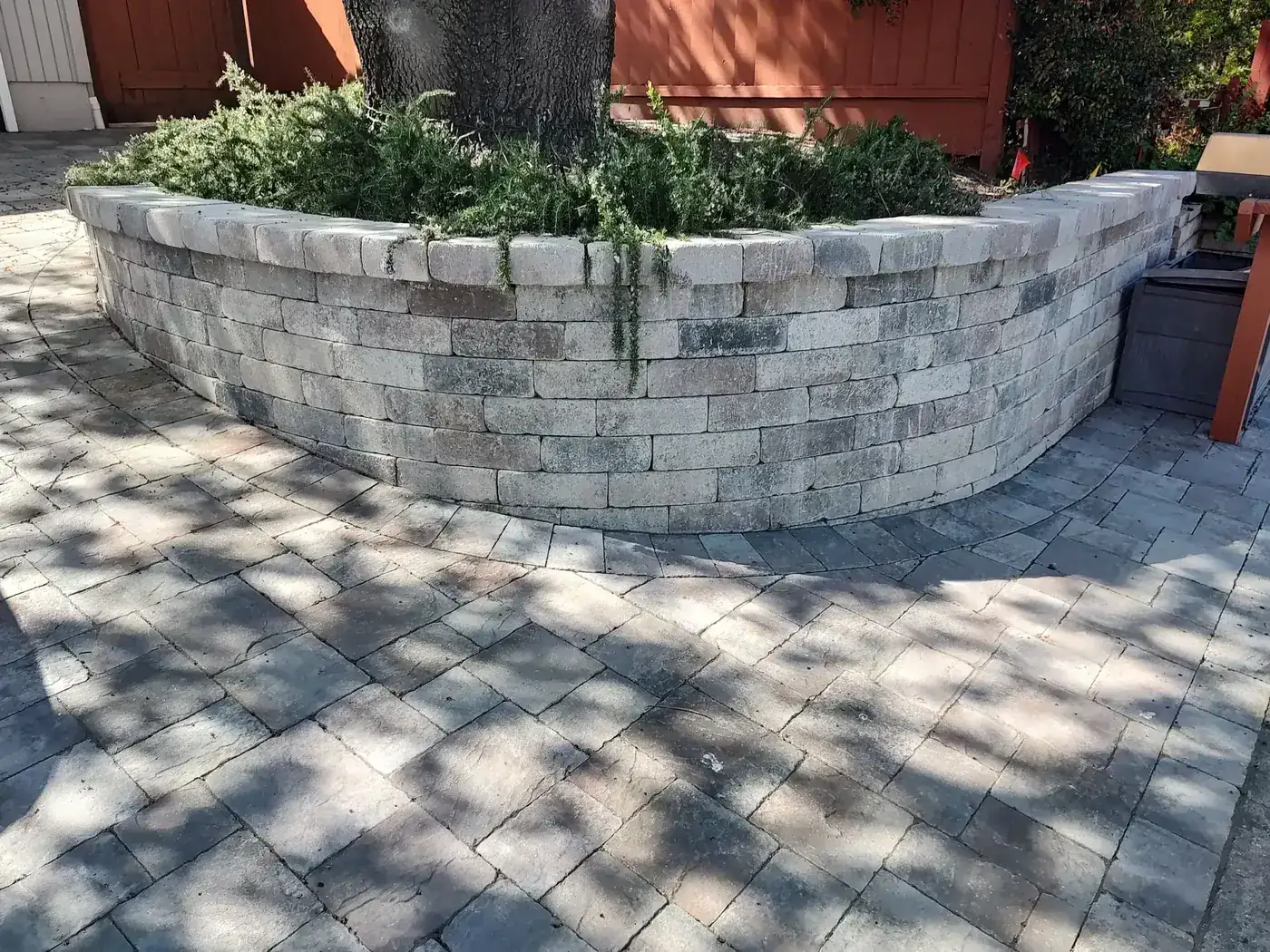
Plant and Tree Installation
Trees and garden-bed planting add living elements to the landscape, with plant warranty coverage up to 1 year. Planting projects range from about $2,000 to $5,000 in our published San Jose guide.
Landscape contractor since 1987: insured, reviewed on Yelp and Google
Landscape Associates of CA, founded in 1987 by David Muhoberac, is fully insured. Yelp shows 4.6 stars from 46 reviews; Google shows 5.0 stars from 8 reviews (checked October 2026).
Our free on-site estimate includes an itemized quote for the proposed work. We reply to inquiries within 24 hours and take calls and texts at (408) 207-5545. Read about David and the company
David Muhoberac founded the company in 1987
Get Free QuoteReal photos of our landscape work
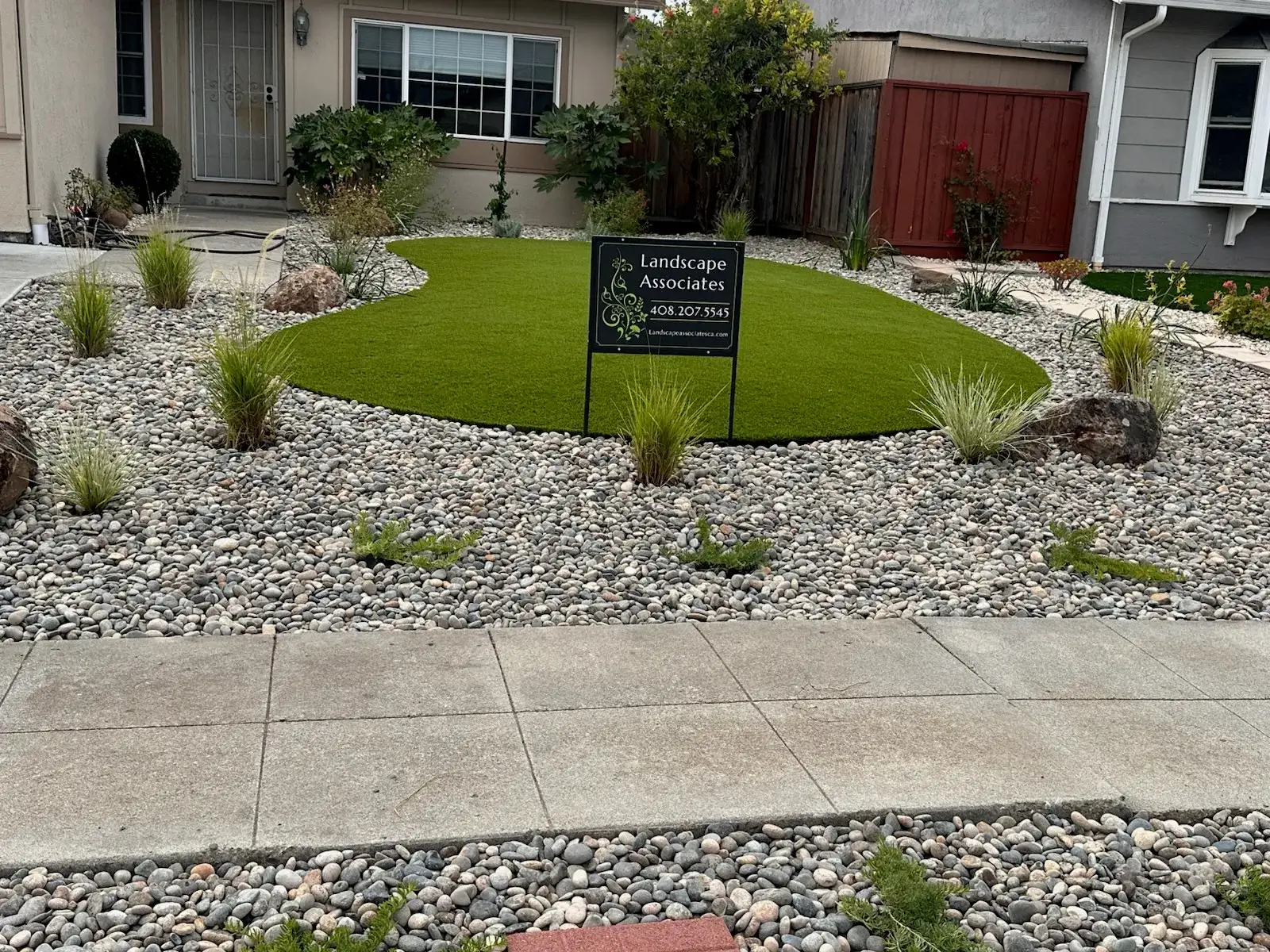
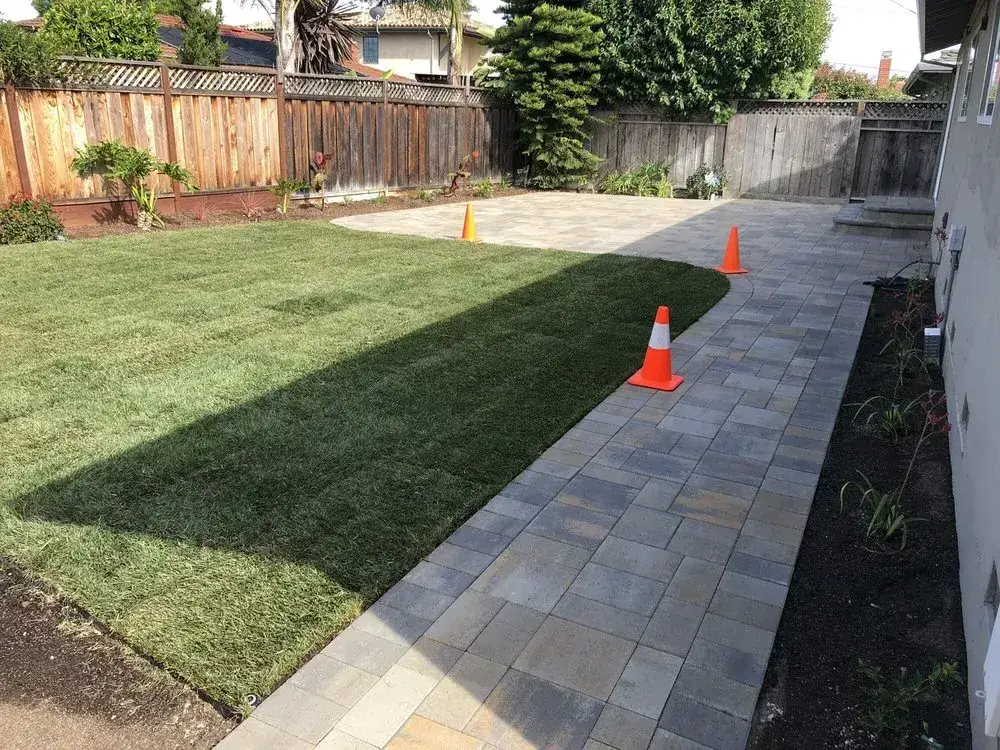
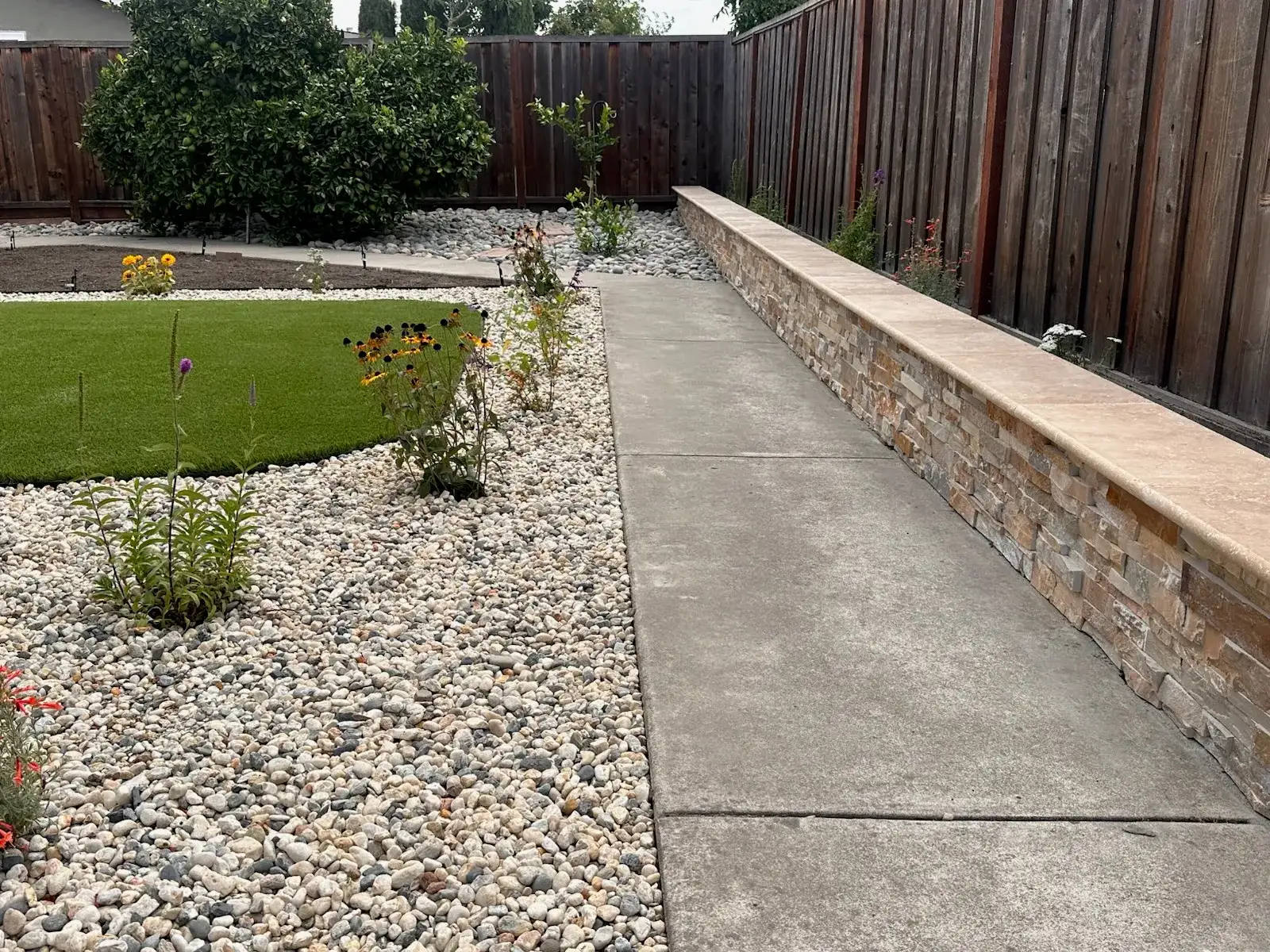
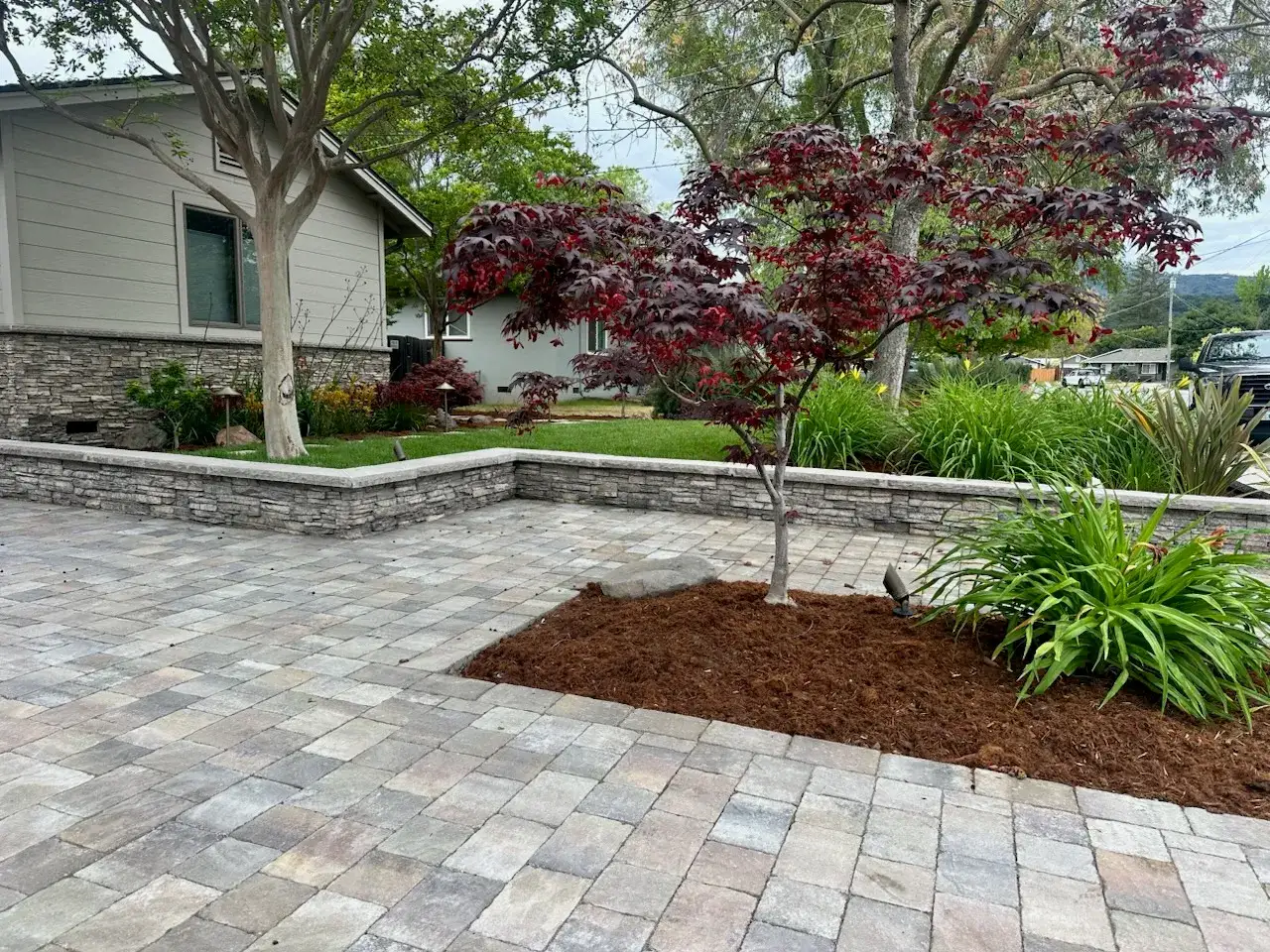
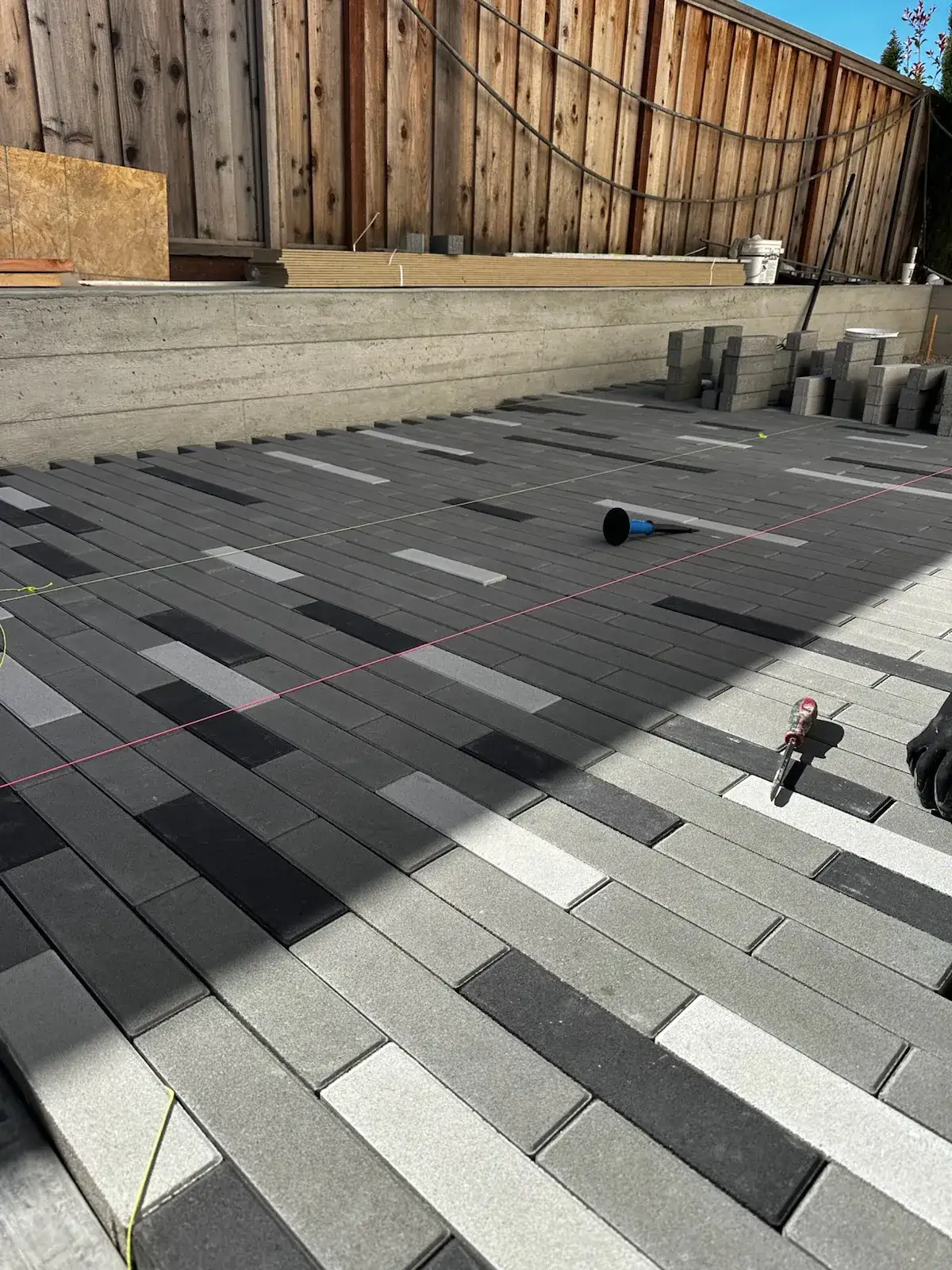
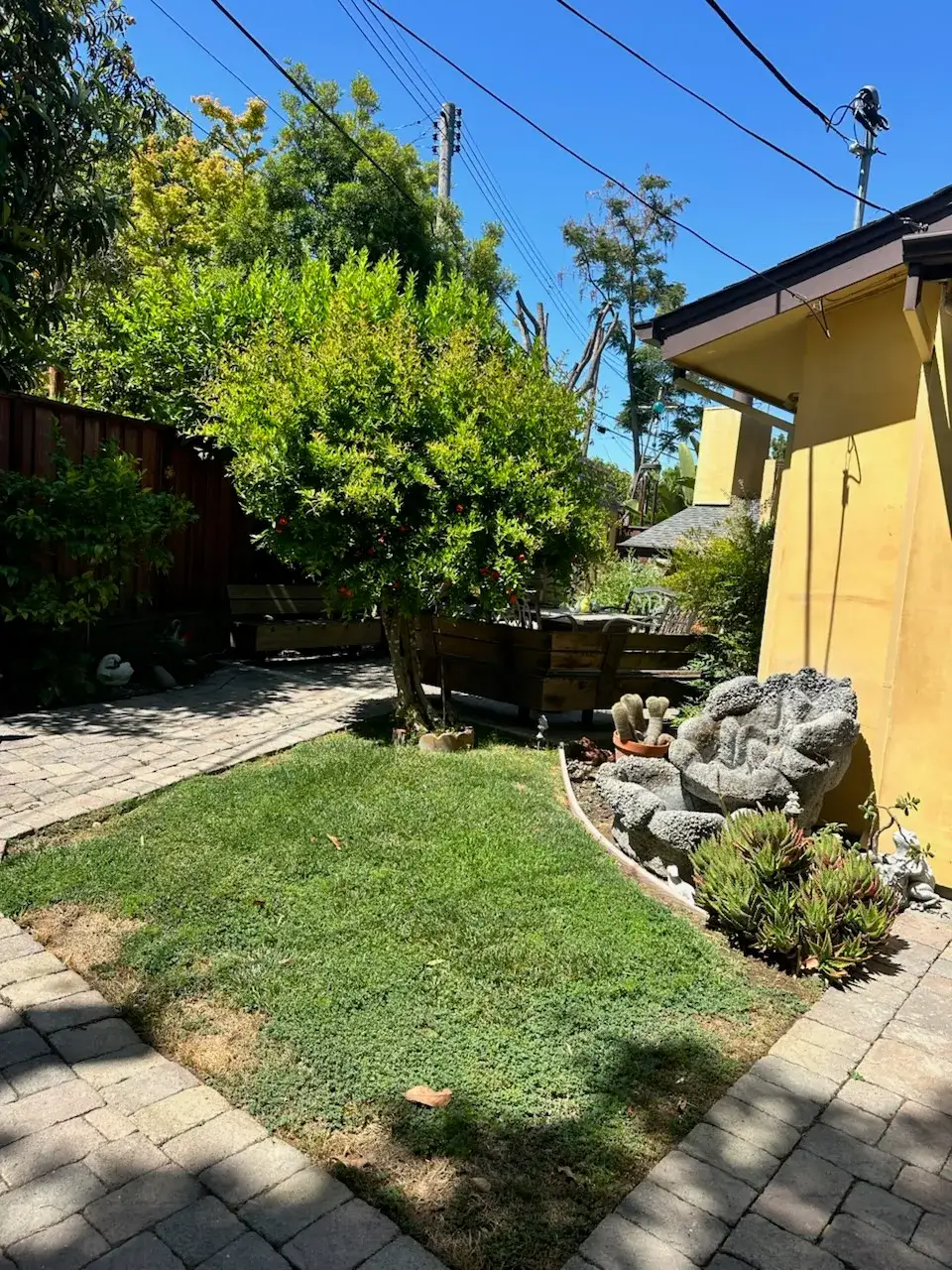
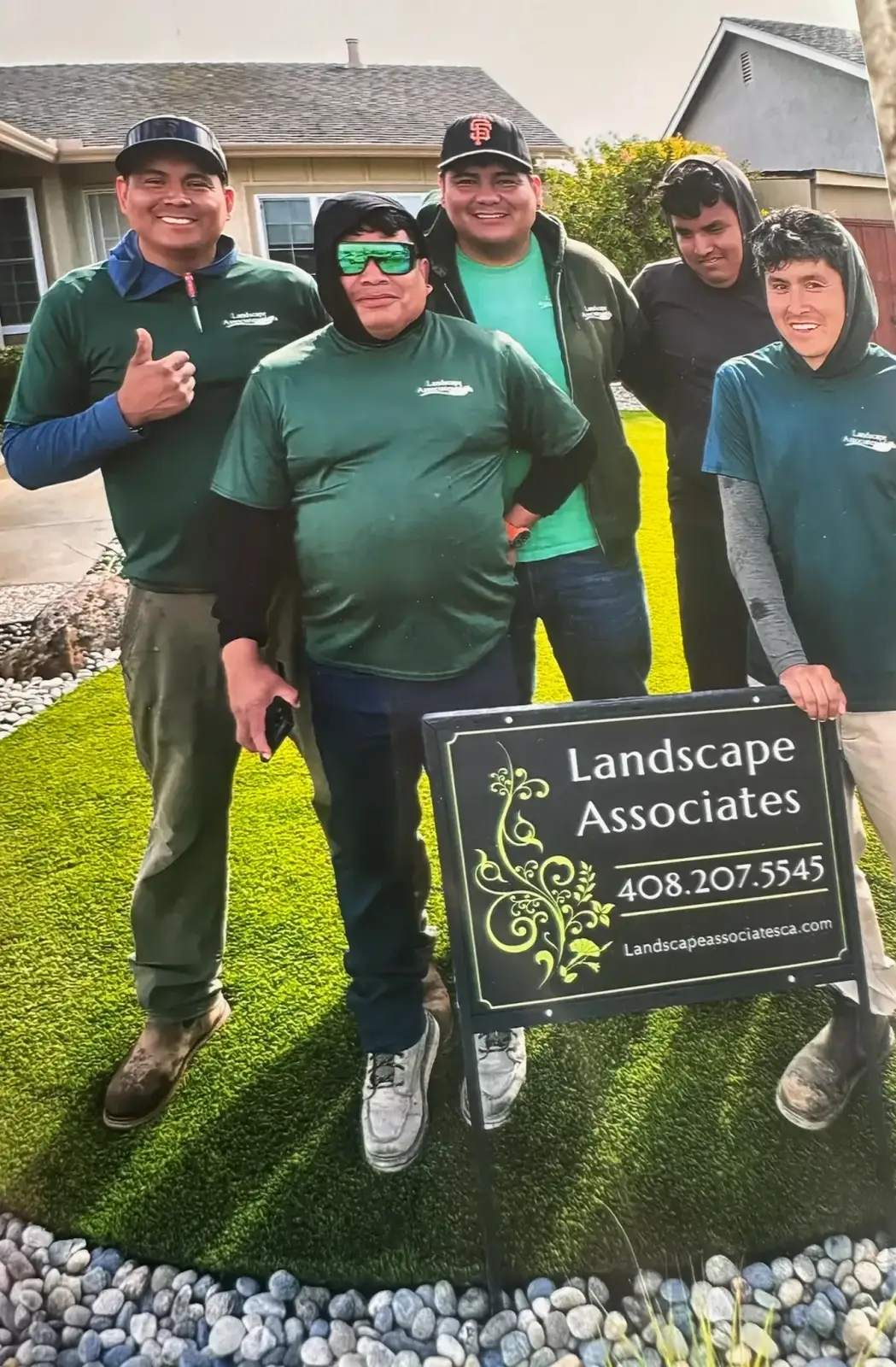
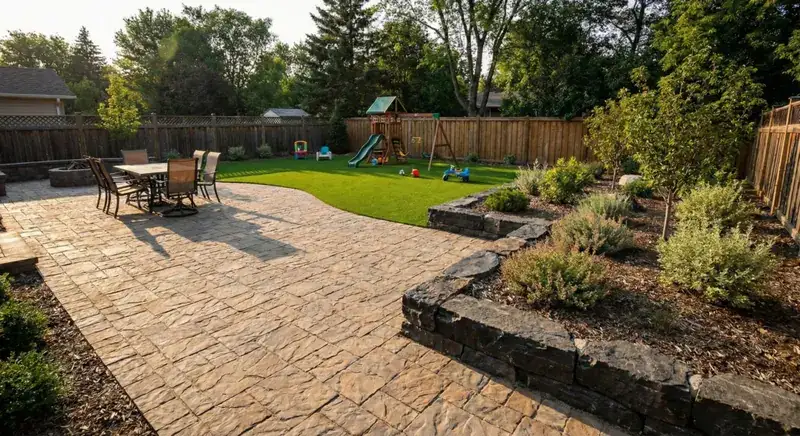
These project photos show turf beside pebble beds, a driveway beside a block wall, and sod next to a paver patio. The gallery also shows our crew standing in a finished front yard.
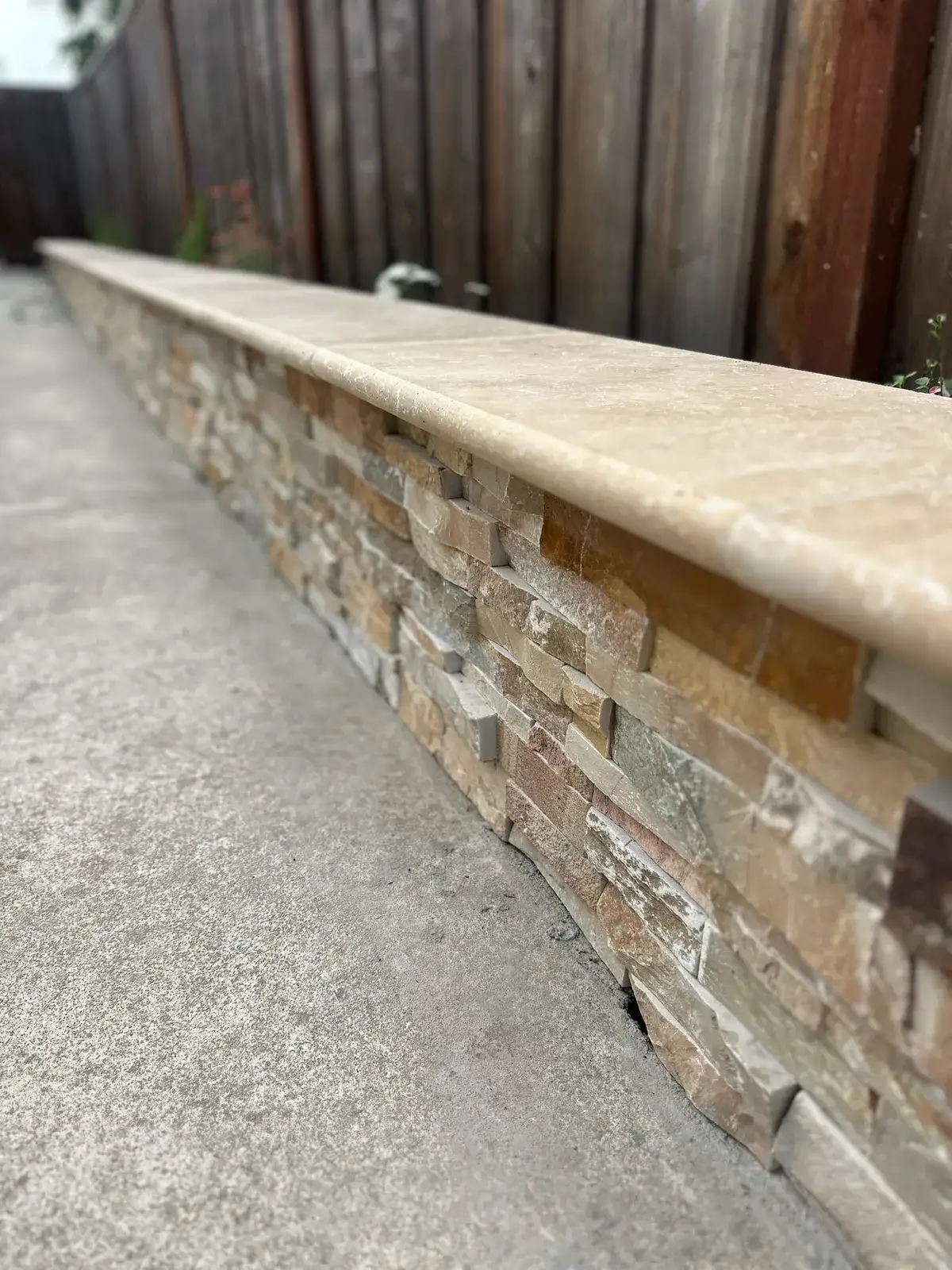
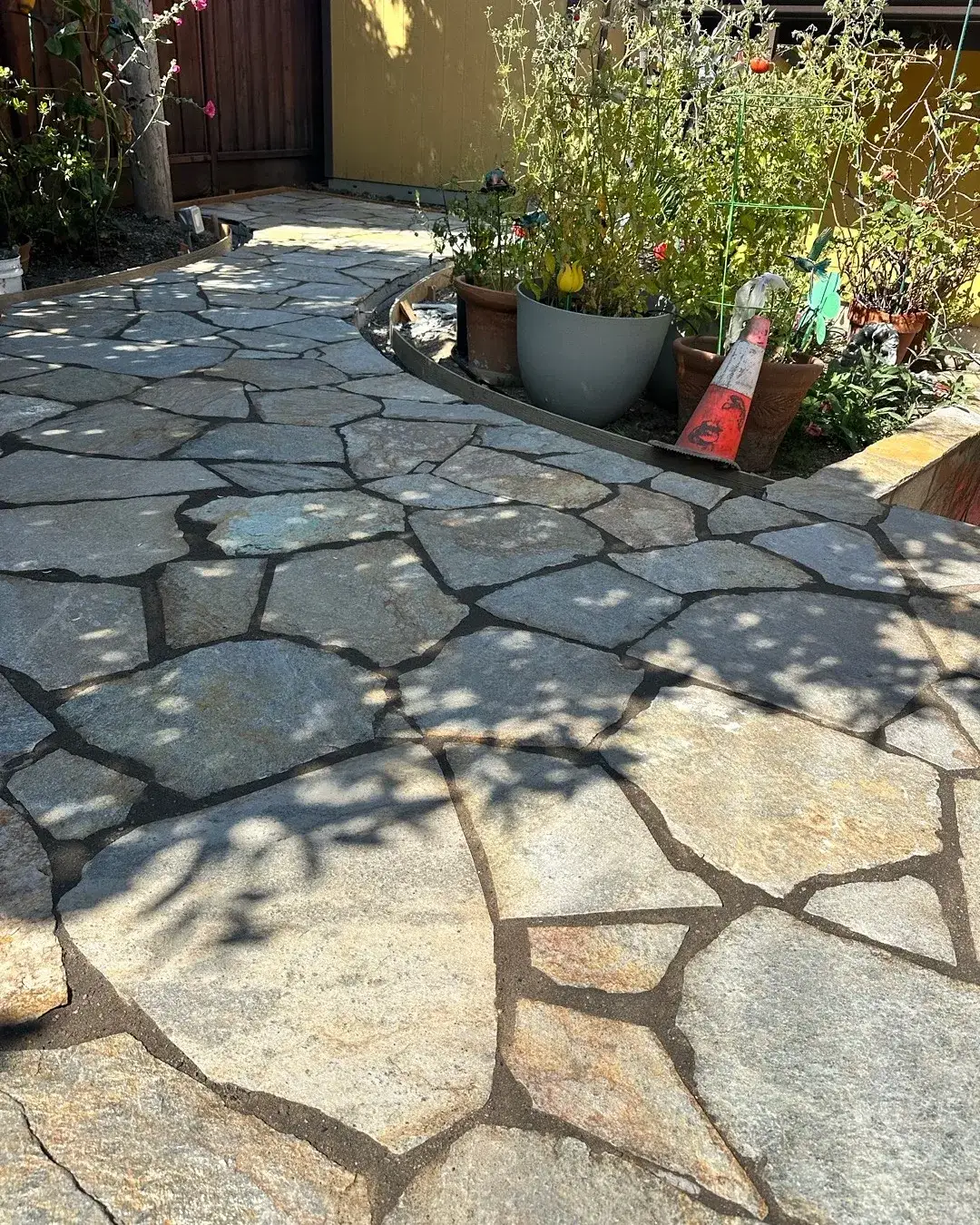
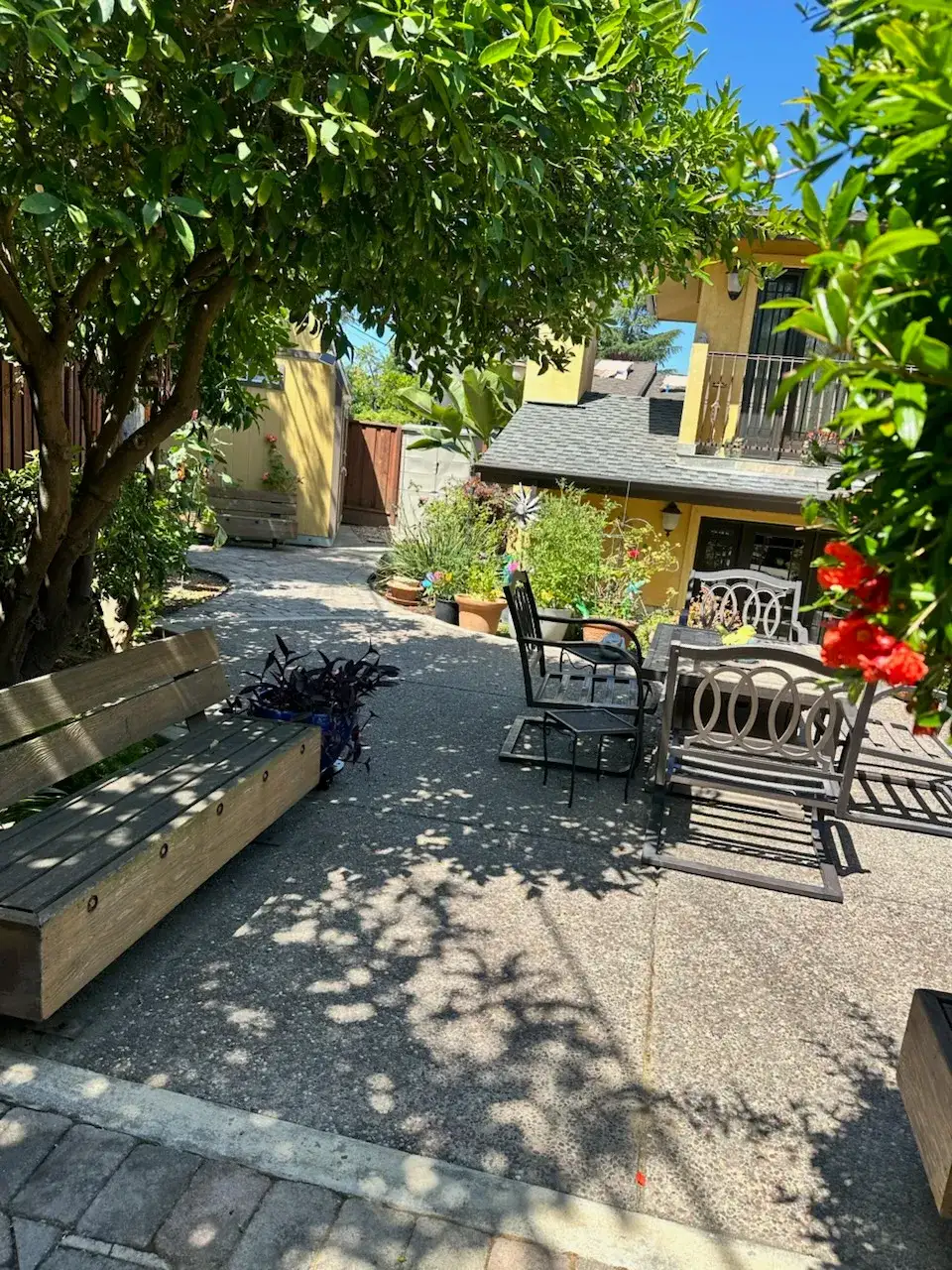
The linear paver photo shows a patio being installed. Other views show a travertine-capped seat wall, a flagstone path, and a cottage yard with lawn, raised beds and a bench beneath a mature tree.
From the first call to the finished landscape
- 1
Free on-site estimate
Landscape project inquiries reach us by phone or text at (408) 207-5545. We reply within 24 hours and offer a free estimate at your property.
- 2
Itemized project quote
The quote sets out individual costs for the landscape work. Pricing is project-based, whether the scope is planting, paving or a full backyard renovation.
- 3
Landscape installation
We install the features selected for your project, such as walls, paving, turf and lighting. Our published San Jose renovation timeline is 2 to 6 weeks.
- 4
Walkthrough and warranty coverage
The walkthrough is a review of the completed landscape work. Paver materials and workmanship carry lifetime coverage; artificial turf has 15 years, irrigation, lighting and drainage have 2 years each, and plants have up to 1 year.
What Our Clients Are Saying
Reviews from Yelp and Google, with the reviewer's city and date
David and Obed were great from start to finish. They gave us solid advice on design choices and made sure our vision drove the project. They took a backyard full of dirt and turned it into our family's dream outdoor space. Highly recommend!
San Francisco, CA
David's team did a beautiful job transforming my yard into a gorgeous patio. They worked closely with me to bring my design to life and went the extra mile to make sure everything was right. Honest work, no hidden costs, no surprises.
Cupertino, CA
Big job: stump removal, full irrigation replacement, new sod, paver driveway, retaining walls, and lighting. It turned out more beautiful than we imagined. We liked the results so much we had them redo the front yard a few months later.
San Jose, CA
I cannot recommend this company enough. David turned my backyard, basically a giant hill of dirt and weeds, into a gorgeous oasis of fruit trees, plants, flowers, and retaining walls. Working with him was a real pleasure and the pricing was very fair.
San Francisco, CA
This was our second time using Landscape Associates, at a different property. David, Obed, and the crew added new paver stones, a planter, and expanded our irrigation. They even took care of drainage issues the original home builders had left behind.
San Jose, CA
Landscape Associates did a full remodel of my front and back yards. David understood exactly what I had in mind, delivered the yard I hoped for, and somehow made it even better. He kept in touch through every step and his crew was respectful of my property.
San Jose, CA
If I could give more stars I would. Workers showed up every single day at 8:30am sharp. David was always easy to reach and when I had changes mid-project, they accommodated every one without complaint. The customer service really set them apart.
Milpitas, CA
Great communication throughout and they walked us through every step. The paver patio and driveway are flawlessly integrated. We would absolutely hire them again. In fact I was already texting David about redoing the entire front yard.
San Jose, CA
We are very happy with the results. David installed a new front lawn and side yard plantings and the whole project wrapped up in a week. We were impressed that they renewed our entire irrigation system as part of the job. Would recommend to anyone in the area.
San Jose, CA
Questions about planning your landscape project
These answers cover our service area, estimates, published costs and the steps involved in starting landscape work.
Call (408) 207-5545What landscaping services do you offer?
Our work covers landscape construction, retaining walls, pavers, concrete, artificial turf and real lawns, planting, irrigation, drainage, lighting and outdoor kitchens. Landscape Associates of CA serves residential and commercial properties, with ongoing maintenance available alongside installation. Each project quote lists the cost of individual items.
How do I get started with your services?
A call or text to (408) 207-5545 starts the conversation about your property and the work you have in mind. Email inquiries reach us at david@landscapeassociatesca.com. We respond within 24 hours and provide free on-site estimates. Business hours are Monday to Friday, 8 AM to 5 PM.
Can you work within my budget?
Our free on-site estimate lists the costs of the proposed landscape work for comparison with your budget, with individual prices for each part of the project. Our published San Jose guide lists planting from about $2,000 to $5,000 and full backyard renovations at $25,000 to $75,000+.
Which cities do you serve for landscaping?
Landscape Associates of CA works in San Jose, Saratoga, Los Gatos, Los Altos, Los Altos Hills and Monte Sereno, as well as Monterey and Carmel, including Carmel Valley and Pebble Beach; Campbell, Cupertino and Sunnyvale are nearby. Residential and commercial installation and ongoing maintenance are available across our service area.
How much does landscaping typically cost?
Our published San Jose landscaping cost guide lists full backyard renovations at $25,000 to $75,000+ and drainage corrections at $1,500 to $8,000. The Saratoga landscaping cost guide lists outdoor kitchens at about $15,000 to $50,000+ with appliances. Your on-site estimate lists the individual costs for your project.
What is the difference between hardscaping and softscaping?
Hardscaping means the built surfaces and structures in a landscape, including paver patios, concrete paths and retaining walls. Softscaping means the living elements of a landscape, such as sod, trees and planted beds. We install both, alongside irrigation, drainage and lighting, for residential and commercial properties from San Jose to Carmel.
Do you offer free landscaping estimates?
Yes, we offer free on-site estimates for both residential and commercial landscape work. We itemize project costs and reply to inquiries within 24 hours. Estimate requests for installation and ongoing maintenance reach us by phone or text at (408) 207-5545, or by email at david@landscapeassociatesca.com.
How long does a typical landscaping project take?
The timeline depends on the kind of work: our published San Jose figures are 3 to 7 days for most paver patios and 2 to 6 weeks for a full backyard renovation. A full backyard renovation can include pavers, retaining walls, artificial turf and landscape lighting.
Are you insured?
Yes, we are fully insured for our residential and commercial landscape work. Landscape Associates of CA was founded by David Muhoberac in 1987 and offers installation plus ongoing maintenance. We provide a free on-site estimate, itemize project costs and reply to inquiries within 24 hours.
What is the best time of year to plant in the South Bay?
Our published South Bay planting guide identifies October to November as the best time to plant trees and garden beds. Our plant and tree installation service includes garden-bed projects, with plants covered for up to 1 year. The drought-tolerant plants guide for San Jose covers planting choices.
How do I choose a landscaping company?
An itemized quote, proof of insurance, customer reviews and the warranty terms for each service provide a basis for comparing landscaping companies. Landscape Associates of CA is fully insured, provides itemized project pricing and offers free on-site estimates. Our paver warranty covers both materials and workmanship for a lifetime.
Do I need a permit for landscaping work?
Permit requirements depend on the work and its location, with different thresholds set by each city. Our city landscaping pages list the local permit rules and their sources (checked October 2026). A wall in San Jose and one in Monte Sereno are subject to different city requirements.
Landscaping services in Santa Clara County and on the Monterey Peninsula
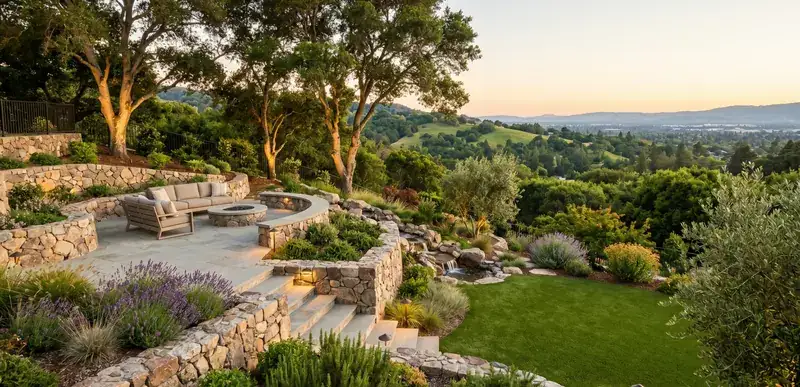
Landscape Associates of CA offers landscape construction for homes and commercial properties in Santa Clara County and on the Monterey Peninsula. The built elements include retaining walls, paver surfaces and concrete paving. Our service area spans San Jose, Saratoga, Los Gatos, Los Altos and Los Altos Hills, Monte Sereno, Monterey and Carmel, including Carmel Valley and Pebble Beach, with Campbell, Cupertino and Sunnyvale nearby.
We offer artificial and real turf services and plant and tree installation, along with irrigation systems for watering and landscape drainage to collect and move water. The city pages explain Valley Water Ordinance 23-02 for properties on Valley Water-supplied potable water, Cal Am's Monterey Main-system and satellite-system watering schedules, and Carmel-by-the-Sea's prohibition on new artificial turf (checked October 2026).
Our services also include outdoor kitchen installation and outdoor lighting for paths and landscape features. We also offer ongoing maintenance for existing landscapes. Our mailing address is 125 Surf Way #443, Monterey, CA 93940; calls and texts about projects go to (408) 207-5545.
Get in Touch
Call us, send the estimate form, or email us. We reply within 24 hours to book a free site visit. Call or text (408) 207-5545.
- (408) 207-5545
- david@landscapeassociatesca.com
- Mailing address: 125 Surf Way #443, Monterey, CA 93940
- Mon - Fri: 8:00-5:00 · Closed on weekends